INSIDE OUT 2012 (Toronto) – Capsule Reviews (Paolo Kagaoan)

INSIDE OUT 2012 (Toronto)

Joshua Tree, 1951: A Portrait of James Dean

Directed by Matthew Mishory

A shorter word count is probably better for a movie like Joshua Tree, 1951: A Portrait of James Dean, portraying the star pre-fame. A longer format would just indulge me in making James Dean jokes, specifically targeting James Preston. I understand the deliberate artistic decisions to do or not to do mimicry, like Michelle Williams as Marilyn Monroe. But when he opens his mouth, the willing suspension of disbelief is violently lifted. I’ve seriously seen Halloween costumes more nuanced that Preston’s performance.

Nonetheless, film criticism is not about bitchiness and is about trying to find the nice things about bad movies, or looking at what could have been. The black and white cinematography doesn’t seem earnest. It’s supposed to obfuscate any part of the scene that might betray the seamlessness of the time period they’re trying to portray. But the frame feels too clean for the 1950’s. There are moments of colour through scenes shot with 16mm or super 8, and those have the grit and the rough texture that fits more with the era. The colour scenes actually make Preston look more like Dean. There’s also Dalilah Rain playing James’ wrangler Violet. Her performance isn’t perfect, but she’s the most period-correct thing in a movie of actors who are too contemporary.

Immediate Boarding (Tur & Retur)

Directed by Ella Lemhagen

Because of Ella Lemhagen’s The Crown Jewels playing this year, the festival took a look back at her earlier, better work. Immediate Boarding is this year’s free, all-ages friendly screening. Released in 2003, it’s like Freaky Friday but with girls who dress up as boys who dress up as girls. Eleven-year-old urbanites Martin and Julia look alike but are polar opposites of each other. One’s a boy and the other is a girl, one’s an inhibited piano player while the other is a messy-haired wild child. They eventually meet at the airport in Stockholm. Julia, who is reluctant to see her mother marry some troglodyte, snatches Martin’s boarding pass to Norrland near the Norwegian border, leaving the latter to fly south to Julia’s new family. And both have to be disguised as each other.

The movie is a bit on-the-nose with its mise-en-scene, showing extremes of sexuality that Julia and Martin have to conform to. Norrland is gruff and manly, where the tomboyish Julia meets Martin’s benevolent rural father Torkel (Jorgen Langhelle of 2011’s The Thing prequel). The south has 2000’s tacky techno-fashion, where Martin enters Julia’s Barbie-pink house, although it does have a workout room for Julia’s step-father to be. But Immediate Boarding exists to showcase Amanda Davin’s performance as both protagonists. She does simple things like drop her voice but her movements and behaviour during the movie’s pathos-filled scenes are signs of what could still be a bigger career.

Dirty Poole: A Documentary about Wakefield Poole

Directed by Jim Tushinski

Dirty Poole: A Documentary about Wakefield Poole is about Wakefield Poole, one of the many homosexuals who were part of the disco generation and had to be renaissance men. Director Jim Tushinsky showed his audience clips from this work in progress, which I can classify within four chunks. The first is his turn from being a Broadway choreographer to becoming what he’s famous for – an art film director whose movies, despite their cinematographic beauty, cross the line towards pornography. The second is a clip that won’t end up in the released product because of multiple copyright concerns. The third captures Poole as one of the gay New Yorkers who exiled themselves to San Francisco, his business smarts hindered by cocaine and crack cocaine use. The last chunk of clips is him visiting Fire Island noting what has changed and what hasn’t.

These clips are satisfying as they are, having no need to go through the perfunctory history lesson that other, more critically acclaimed docs, have to use. Tunshinsky has also expressed a desire to expand on Poole’s Broadway time and failed comeback to choreography. Although he predicts that that part of his life won’t be as interesting as the porn, I would actually like to check out Poole’s other ventures. All in all, I can’t wait to see the final product.

Follow me on Twitter @paolocase

Like Entertainment Maven on Facebook

INSIDE OUT 2012 (Toronto) – Vito Review (Paolo Kagaoan)

INSIDE OUT 2012 (Toronto)

Vito (2011)

Directed by Jeffrey Schwarz

Being a part of a younger generation I did not know who the subject of the award-winning documentary Vito was, although I am familiar with his work, having seen glimpses of The Celluloid Closet when I still had TCM. The documentary is generous towards neophytes, regurgitating The Celluloid Closet’s major points and arcs in Hollywood’s depiction of homosexuality. My knee-jerk stance on the work is (counter?)reactionary, almost comparing it to ‘newly surfaced evidence’ that historical figures like Abraham Lincoln were gay. In a layman’s reductive terms, not everyone in the history of the world is gay. Sure, the existence of the Hays code, which prohibits ‘profane’ words and actions, especially homosexuality, meant that directors who have worked between 1934 to 1966, many of whom are gay, had to depict queerness on the down low. I might get in trouble for saying this or wording the rest of this paragraph incorrectly, but ‘looking at subliminal messages’ can also devolve into overreading. But he can also be seeing homosexuality as a fleeting act between one person to another as opposed to a declarative commitment. And there’s a valid argument for both perspectives of sexuality without attaching a stigma towards a character as forever being ‘un-straight’ just because he had one encounter. Again, The Celluloid Closet questions viewpoints and depictions of sexuality, making us wonder if there’s a difference between homosexual and homo-social (a fancy word for Scorsesean bromance). Besides, if characters like dowdy maids are conventionally accepted as gay, why can’t two masculine men taking to each other about their ‘special gifts’ be seen similarly? Vito, strategically, also looks at Russo’s gay activism in the cultural front, with his TV show, tours and Celluloid Closet lectures.

Vito also looks at his early life. He starts out with having four gay friends when he was still in New Jersey in the early 1960’s to his sexual awakening later that decade, as New York City expands the number of gay friends and lovers. The big city has also given him access to the movies, watching them as well as showing them to crowds of gay men who have a unique perspective of these movies separate from conventional audiences.

The documentary also shows his political struggle, starting from when he was witnessing the bathhouse raids and suicides of persons within a yet-unformed gay community. He was angry because no one inside the bars or the bathhouses was doing anything about their oppression.

The documentary, with brutal honesty, also shows the schisms and mutations fitting for each letter within the LGBTTQ2S acronym. It then portrays the differences within the community between 1969, when transvestites rioted during Stonewall, and the early 70’s and other short times when politics within the gay scene had become more lax. The documentary exudes Russo’s attitudes when confronting problems both outside and within the community. Russo tells his audiences to be more inclusive towards each other yet be vigilant during intermittent times when gay rights are being challenged, which is still occurring to this day.

The screening was followed with a Q&A with Jeffrey Schwarz, when he revealed that his next project involves a documentary about Divine, the voluptuous transvestite who has starred in John Waters’ movies. I’ve never been more excited for a documentary until now.

Follow me on Twitter @paolocase

Like Entertainment Maven on Facebook

INSIDE OUT 2012 (Toronto) – Jobriath A.D. Review (Paolo Kagaoan)

INSIDE OUT 2012 (Toronto)

Jobriath A.D. (2011)

Directed by Kieran Turner

First of all, it’s pronounced Joh-BRAI-ath.

What separates Jobriath A.D., about the first gay non-rock star Jobriath, from most documentaries is the animation used within it. Being created by four different animators, they all have a coherently colourful aesthetic. And unlike animation in other documentaries, which is often used for infographics, these segments attempt a narrative purpose. But it might also be one of the movie’s weak spots, as they just repeat the points within the other parts of the movie.

The documentary sets up this joyful mood, starting where many contemporary gay movies begin – the late 1960’s, the gay movement being a residual from that decade’s sexual revolution. Jobriath, who played Woof in the first regional productions of Hair, outshines the musical’s major characters through his vocal energy. After the musical’s last performance in LA the cast has relatively gone their separate ways, Jobriath beginning to write his first album. The movie’s talking heads belong to two groups. The majority have been around during the music’s composition and recording, affirming the optimism they have for this talent. A minority were the people from newer generations who have discovered his music, telling the camera of the music’s uniqueness and influential value. The music was operatic but it fit within rock music and its cousin, glam rock. Jobriath was willing to make the transition, even outdoing the subgenre’s stars like David Bowie. He and his manager Jerry Brandt plan to outdo Bowie by playing on the homosexuality angle. That’s before realizing how much they’ve miscalculated.

NOW Magazine’s Benjamin Boles describes Jobriath as the pre-Internet Lana del Rey, both acts being hyped up before seeing them perform. There are other parallels among Jobriath and other real or fictional musicians. I suspect that he might have influenced This Is Spinal Tap and Hedwig and the Angry Inch’s flamboyant shoestring theatricality. The same hype was built around Gabbo and 50 Cent, if either had failed. All these examples were objects of mockery, which Jobriath was in his time, but the movie rightfully turns this backlash against him as a tragic phenomenon that destroys his life.

Brandt might have been the person who helped ruin Jobriath, and he’s also one of the movie’s talking heads. Another of the movie’s problems is that it lets Brandt hijack it the first time he appears on screen. But at least Keiran Turner’s documentary is comprehensive, showing Jobriath’s life and the people in it before, during and surprisingly after Jobriath slipped in and out of his multiple personas.

‘Rock-umentaries’ are all about immersing the audience in the musician’s work and convincing them to buy and download and whatever. To do that it shows footage with him in the studio doing what he does best – o hai Richard Gere in the background – as well as Jake Shears, Stephen Merritt and the lead singers from Okkervil River and Def Leppard lauding him. But despite showing these things it never fully gets me to that level, and there are many possible reasons for that. Either because there’s something I can’t articulate within the movie’s presentation that hinders it. That Jobriath’s music is too esoteric for his own good, a quality oft-repeated by the movie’s talking heads. Or that I’m not into rock or The Scissor Sisters or The Magnetic Fields at the moment. But I did Youtube one of Jobriath’s videos so I might just be getting there slowly, like a steep tower that he mounts, unable to reach his zenith when he was still alive.

Follow me on Twitter @paolocase

Like Entertainment Maven on Facebook

The Movie Junkie’s 2012 Summer Movie Preview Part 1 (Kirk Haviland)

I know, I know. The Avengers has already broke records everywhere, and you’re doing a summer preview now? I must confess that I’m a bit of a traditionalist in that I feel the real summer season starts on Victoria Day in Canada/Memorial Day in the US. And since we recently had Victoria Day in Canada, it seems like as good a time as any for this article (ed – apologies, posting this a bit late). I’ll try to give indie/smaller releases their due along with the blockbusters. Ultimately, everything on here will be stuff that intrigues me…in either a good or bad way.

Ed – Two of the Movie Junkie’s picks already have reviews by him, MIB3 and Chernobyl Diaries.

JUNE

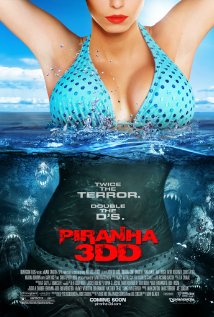
Piranha 3DD (June 1st)

The first Piranha (from 2010, not the James Cameron version I have yet to see) was a guilty pleasure. Will the next one have the same goofy campiness that made the first one, or will it “jump the piranha”?

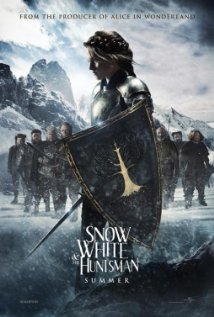
Snow White and the Huntsman (June 1st)

The second re-envisioning of the Snow White story this year, Snowy and the Huntsman at least features Chalrize Theron camping it up as the wicked queen. The real question though is will we get the same emotionless performance out of Kristen Stewart as Snow White that she has become famous for in the Twilight series.

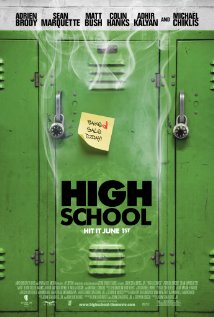
HIGH School (June 1st Limited)

This brilliantly overlooked comedy and Sundance sensation that has been sitting on the shelf for over two years will finally get a release, albeit a limited one. I saw this at Toronto After Dark in 2010 and loved it. Search this one out!

Madagascar 3: Europe’s Most Wanted (June 8th)

The gangs all back! *shudder*

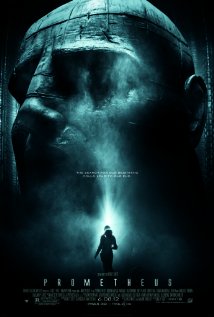
Prometheus (June 8th)

Easily the most anticipated of the summer outside of The Dark Knight Rises, Prometheus features a stellar cast and Ridley Scott’s eagerly awaited return to the Alien universe, although not a direct sequel/prequel. Consider this an opening weekend must see before it’s ruined by the proverbial “water cooler” on the following Monday.

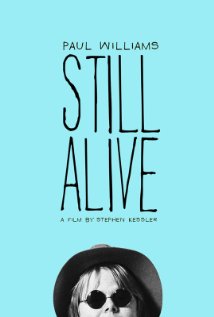
Paul Williams: Still Alive (June 8th Limited)

The Tiff surprise hit comes to regular theaters, as Paul Williams proves he is still very much alive and struggling to keep the fame going.

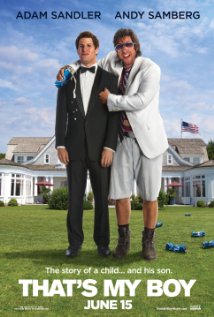
That’s My Boy (June 15th)

Adam Sandler tries to destroy Andy Samberg’s career in this awful Happy Madison vehicle. *shudders again*

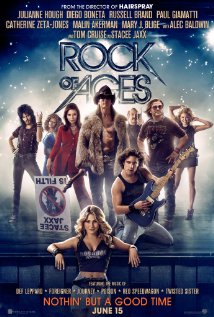
Rock of Ages (June 15th)

Tom Cruise doing Karaoke versions of classic 80’s hair metal tracks with Alec Baldwin running around in a very bad wig? This could be Hairspray “John Travolta in a drag fat suit” bad. The awful sounding soundtrack clips that have landed online aren’t helping.

Brave (June 22nd)

Pixar tries to atone for last year’s disappointing Cars 2 with this tale of a young princess in the highland times of movies like Braveheart. The animation looks crisp and every trailer makes me interested more and more. Merida could be the most adventuresome female Disney character since the underrated Mulan.

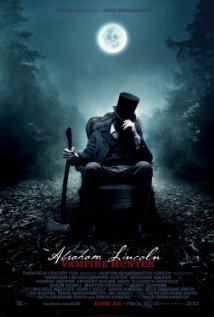
Abraham Lincoln Vampire Hunter (June 22nd)

Based on the best-selling novel, Abraham Lincoln is revisionist history where his parents have been killed by vampires and Abe seeks revenge Dark Knight style with a big axe. If this embraces the goofiness of its premise it could be the most fun in a movie theater this summer, or it could be this year’s Jonah Hex. Fingers Crossed.

G.I. Joe : Retaliation (Pushed back to 2013)

With Channing Tatum and Marlon Wayans out, Dwayne “The Rock” Johnson and Bruce Willis in, G.I.  Joe looks like tons of fun and could be the surprise hit of the summer. The trailer scene with Cobra Banners emerging on the White House is still pretty badass.

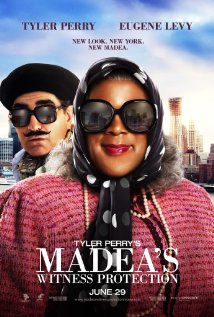
Tyler Perry’s Madea’s Witness Protection (June 29th)

Love or hate him Tyler Perry’s films make money, and lots of it, especially the ones with Madea. Expect this to beat out G.I.Joe  for the opening weekend.

The Loved Ones (June ?)

This brilliant TIFF Midnight Madness selection appears to be finally getting a release. Read my thoughts on the film.

In the meantime, keep your eyes locked on Entertainment Maven; the July and August portion of the preview is still to come!

Till Next Time,

Movie Junkie TO

Make sure to keep up with what’s going on at Entertainment Maven by liking our Facebook page and having updates delivered right to your Facebook News Feed. It’s the only way to stay on top of all of our articles with the newest blockbusters and all the upcoming films and festivals in Toronto.

Follow me on twitter @moviejunkieto

INSIDE OUT 2012 (Toronto) – You are Not Alone (Du Er Ikke Alene) Review (Paolo Kagaoan)

INSIDE OUT 2012 (Toronto)

You are Not Alone (1978)

Directed by Lasse Neilsen and Ernst Johansen

There were two schools of thought within the handful who saw the Danish classic movie You Are Not Alone, made in the 1970’s and portraying adolescent males in a boarding school. There was a group of people who liked it despite of some flaws and there was another who thought that its depiction of adolescent sexuality was ‘a bit inappropriate’. Because of my Catholic guilt and my contemporary views on sexuality – which complement each other on strange instances such as this – I belong to the latter.

It’s difficult to defend this movie or to determine whether it’s worth defending. Should I leave it and say that it’s a time capsule, a relic of 1970’s Danish culture, a manifestation of a general divide and a freedom that I can never be a part of? The ‘worst’ actions it depicts are long shots of two adolescents hugging in the shower and another scene where the main ‘couple’, the younger half of whom is the headmaster’s son, make out.

To be fair, there are also manifestations of heterosexuality within the children in this movie. Some of the students have filled their walls with pictures of naked women and neck around with the young women who do the cooking for the school (all of this makes this movie’s boarding school the worst that I’ve seen in a movie so far). But scenes portraying the latter are shrouded in darkness while the scenes between the boys are depicted under fluorescent or natural lighting. The movie doesn’t use the word ‘gay’, although the gay characters acknowledge that they like boys and that that’s ok.

I do have to recognize that the movie presents those ‘affectionate’ scenes as plausible scenarios, and this is coming from someone who has gone through some bases in middle school and high school. It’s not as if it’s the first time I’m watching relationships like this on film, having seen Lindsay Anderson’s If a few years back. Neither are children asexual beings until they reach an arbitrary age of consent – that’s a world that we adults see as ideal. I’ve read writers who have condemned mostly Hollywood movies from hiding the truth, but why is it that it makes me feel uncomfortable seeing it? Are some truths off-limits in cinema?

The movie doesn’t just focus on the relationships between the boys and some girls, since there are headmasters, teachers, parents and townies within this movie. I’m not fully confident about the intentionality of how we should sympathize with these minor characters. They get the townies right, who are effectively despicable as right-wing hicks who bully our protagonist Bo and almost crucify him for protesting a classmate’s expulsion and call him a ‘communist’. That’s not the same case with the boarding school’s staff. However, I couldn’t believe the lax teacher. The headmaster is stern but not cartoonishly so and I actually thought that the children acted entitled against him when both parties were clashing. Yet I have a feeling that he’s being presented as the villain. I don’t care if this movie makes me feel old, there are just a lot of things within it that I couldn’t agree with.

Follow me on Twitter @paolocase

Like Entertainment Maven on Facebook