TIFF 2012 – Here Comes the Devil Review (Matt Hodgson)

Photo from http://www.tiff.net

Here Comes the Devil (2012)

Starring Francisco Barreiro, Laura Caro, Michele Garcia, Alan Martinez

Directed by Adrían García Bogliano

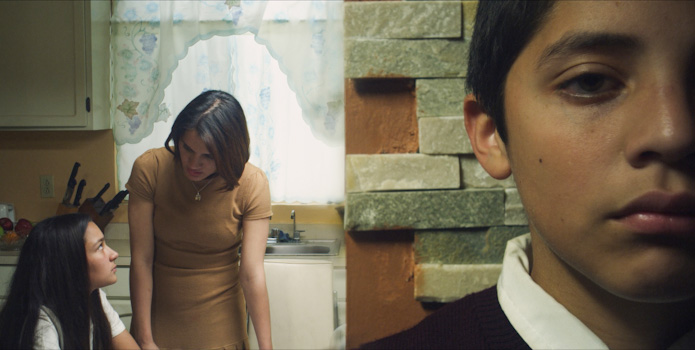
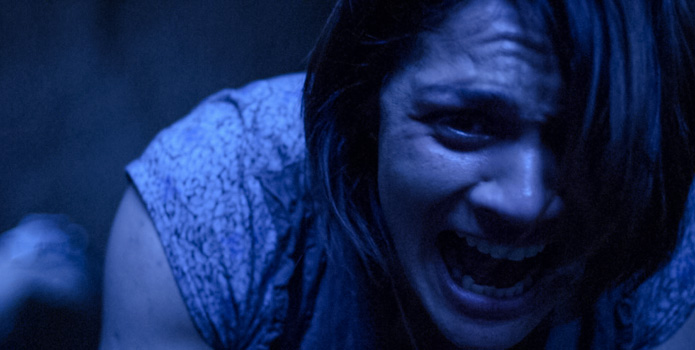
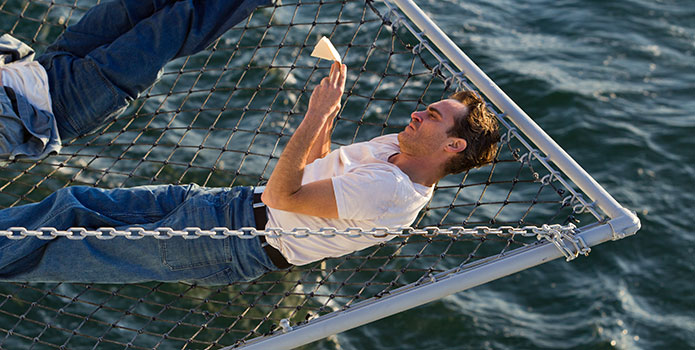
The Vanguard programme at the Toronto International Film Festival (TIFF) was the biggest surprise for me this year. With Midnight Madness delivering a lacklustre lineup, it was the Vanguard section that provided me with the thrills, chills, and boundary pushing filmmaking that I require frequent doses of to maintain my ‘happy camper’ state of mind. I decided to check out Here Comes the Devil solely because of its inclusion in the Vanguard programme, other than that I knew next to nothing about the movie. While not one of my favourite Vanguard selections, Here Comes the Devil certainly has a lot to offer, particularly for viewers who get creeped out by quiet, unhappy, Village-of-the-Damned-like children.

The narrative follows a family of four, two parents, a young boy, and a slightly older sister. During a seemingly harmless family day the kids spend some time by themselves in and around a strange mountain or mound of rocks, but unfortunately they don’t return to the parents who await anxiously for them at the bottom of the rocky hill. When the finally do return, early the next morning, the parents are relieved, but soon discover that their children have changed in a mysterious way. The plot then takes multiple sinister turns, culminating in a what is certain to be a parent’s worst nightmare amongst other gory details.

Photo from http://www.tiff.net

Here Comes the Devil definitely falls in the realm of low budget horror filmmaking, but certainly not in a negative way. The locations are limited, but that is the only noticeable limit placed on the film by the budget. Bogliano gets a lot out of his actors and manages to keep the audience on edge throughout the film, never telegraphing the outcome of the horror, albeit one particular portion of the conclusion was foreseeable from the outset. On the negative side of things Bogliano seems to be incomprehensibly obsessed with zoom shots which tend to distract rather than add to the tension. However, this is a minor complaint, Bogliano’s effort is mostly successful and it would be intriguing to see what his next project is like. Also worth mentioning is a particular special effect sequence involving a slit throat that was incredibly disturbing. One of my film blogging friends said it most appropriately: ‘I don’t think I’ve ever seen that before’.

Here Comes the Devil is definitely worth checking out for fans of horror cinema. It may not be a masterpiece, but there are enough intriguing aspects to make it worth your time.

Like Entertainment Maven on Facebook

Disconnect Review (Dustin SanVido)

Photo from http://www.tiff.net

Disconnect (2012)

Starring Jason Bateman, Paula Patton, Frank Grillo, Hope Davis, Max Theriot, Alexander Skarsgard, Michael Nyqvist, Colin Ford, Andrea Riseborough and Jonah Bobo

Written by Andrew Stern

Directed by Henry Alex Rubin

The subject of social media and its positive and negative effects have never been explored successfully on film with the exception of The Social Network presenting a more focused and loosely based biography of Mark Zuckerberg. While I did enjoy The Social Network for its decision to tell the story of the creation of Facebook as a pseudo-super-villain’s rise to power, 2010’s lackluster Catfish is the only other ‘social-network’ film that comes to mind. Like Catfish, Disconnect is a story of the negative effects and darker side of social media, told through the course of three separate storylines that begin to intersect in a similar mold and structure of the Academy Award winning Crash. I did like Disconnect for its message, acting, and most of the story, but an underwhelming climax stopped all forward momentum which had been building rather splendidly for the majority of the film.

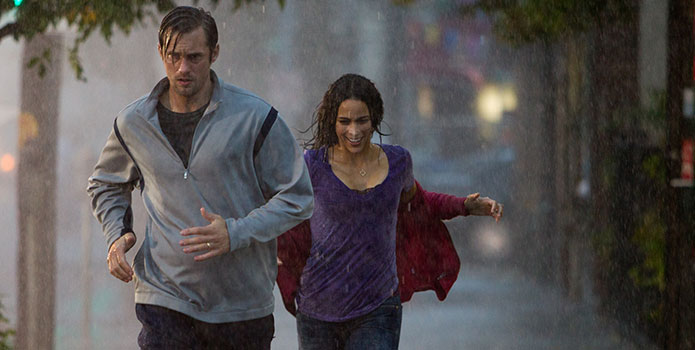
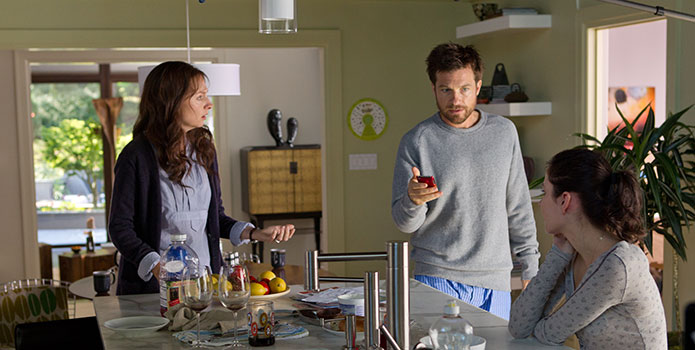
The three stories in Disconnect are that of a still-grieving couple (Paula Patton and Alexander Skarsgard) who must deal with online identity-theft, a news journalist (Andrea Riseborough) writing a story involving the online sexual exploitation of a group of youths, and a high-school outcast (Jonah Bobo) who is cyber-bullied and the severe ramifications that echo through the family of the victim (Jason Bateman and Hope Davis) and that of the bully’s (Frank Grillo). These three storylines are so well-crafted and spend ample time developing so many characters, one might presume the story could feel a bit bloated. Thankfully that’s not the case, as Rubin shifts seamlessly from thread to thread allowing all of the actors’ individual moments to really get the point of the film across: as technology advances more and more our lives become more online-dependent and thus, some of our humanity is lost in the process and the growing isolation we feel in today’s society leaves us disconnected from one another.

The acting is the real standout of Disconnect. All of the actors give fantastic performances that help drive the narrative and really pull you into the turmoil, sadness, frustration and anger that permeates throughout the script. Frank Grillo and Paula Patton are the best of the bunch, turning in career best performances as struggling parents, broken in their own individual ways, and are by far the standouts of the film. I can’t believe I’m saying this, but Alexander Skarsgard has also delivered a career performance here, much like his memorable turn as Model #3 from Zoolander. All joking aside, there are zero weak points to this film from an acting stand-point, and one can’t help but be fully invested in the well-being of every character represented, good or bad. I applaud Rubin for getting the most out of his actors and delivering a technically proficient look into unexplored subject matter, albeit with one small caveat.

Photo from http://www.tiff.net

So much of Disconnect hinges on the climax where all of the interwoven stories CRASH into one another, and this is where the film regrettably comes up short. Due to the emotional moments that escalate toward the third act of the film, unlike Crash, the end resolutions just can’t deliver on the strong buildup that preceded it. I won’t spoil any of them, but they’re just so pedestrian and safe that the tension and suspense drawing out lands with a thud. This may have been a decision by the writers to keep the film from becoming a bleak and depressing vantage point from which to view the social media world, but if you’re going to send a bus full of children careening off a cliff-side with no hope of survival, I’d rather the bus hit the ground and explode than become caught in a large tree leaving the children to look at one another and think “aw shucks”. A poor choice of analogy, perhaps. But in the case of Disconnect, I’d say a poor choice of ending.

I still enjoyed the film quite a bit, but I would’ve lauded the filmmaker if he had been daring enough to go all the way with what his script was driving towards. In the end we’re left with an almost-great and very insightful look into the darker side of social media that stumbles slightly at the end, and as a result is ultimately satisfying.

Like Entertainment Maven on Facebook

The Master Review (Paolo Kagaoan)

The Master (2012)

Starring Joaquin Phoenix, Philip Seymour Hoffman, Amy Adams, Jesse Plemons, Laura Dern, Rami Malek and Ambyr Childers

Directed by Paul Thomas Anderson

I have to admit that I had certain expectations about how much I would like The Master. The muffled thumps and percussion of Jonny Greenwood’s score accompanying handfuls of teasers promising the greatest movie ever made. The accolades and critical acclaim from Venice and here in Toronto. But there’s also the devil’s advocate in my head or on the internet pointing out that The Master’s director, Paul Thomas Anderson, is becoming as misanthropic as his recent protagonist, Daniel Plainview. The worst case scenario is that he’s magnifying on the myopic masculinity that is my least favourite part of There Will Be Blood. And the first scenes almost confirm that, with WWII soldiers galore, our shaky protagonist Freddie Quell conspicuously making trouble among the men. Then there’s a scene with him submerging within a deeper part of the ship where he works, the red lighting in that scene hints towards a more diverse colour palette that reminds me of the images within his earlier work, Boogie Nights.

Then comes a scene that almost made me declare this movie’s greatness, starting out with a close-up of a young woman photographed by Freddie who is, immediately after the war, a glamour shot photographer at a department store. She’s a part of a montage of all-American white faces accompanied by Ella Fitzgerald’s rendition of Irving Berlin’s song “Get Thee Behind Me Satan.” I can talk about this scene or this shot so much, its Busy-esque air, its gushing romanticism missing from the otherwise superior There Will Be Blood. I had doubts on being bamboozled by Anderson’s period touches. But while other directors might sloppily handle their depictions of the past, he does it with specificity and love. This isn’t necessarily a qualm, but Anderson should have just cast one star and the rest are character actors with the same imperfect yet happy faces, waiting to be discovered.

The department store also reminds me of the contrast between its well-to-do customers of peacetime and another montage showing the soldiers who have defended them. The woman’s imperfect patrician nose is given this veneration while the soldiers’ roman noses, bulging eyes and gaunt faces are used as evidence of them as freaks who need to know how to act in the real world. It’s as if the ‘real world’ is more fantastical than the isolating one that war produces, or that the woman is a symbol of reintegration and the man as leashed animals, both polarities that we’ll see for the rest of the movie.

There are a few more things to cherish within this movie. Freddie’s post-department store stint, working with Filipino farm workers (Wat did you gib him?), this borderline stereotypical representation of my people seeming like Anderson knows his way to my heart. Watching this movie would have doubled my Filipino content at this year’s TIFF. There’s the weird kid from The War at Home (Malek) who’s marrying the daughter (Childers) of the movie’s titular Master, Lancaster Dodd (Hoffman) – on a yacht! There’s also the first and second “processing” sessions between Freddie and Lancaster, the former’s teary-eyed confessions freeing him from becoming the slouchy caricature who he could have been. These are one of the few different forms of “processing” that’s a regular part of Lancaster’s cult called The Cause, Anderson portraying the ritual as magically as he could, depicting it with respectful deference as if it was an aspect of an actual religion. And Laura Dern, who’s relaxed this time around!

And of course, the complementary tension of performances anchoring most of the movie. At first glance Hoffman, the most consistent, is my best in show but there’s so many ways to judge what ‘best’ is. Phoenix, the most physically committed, and Adams as Dodd’s wife Peggy, the most surprising, the ruthless face of civilization, have their legitimate claims to their audience’s attention. Dern and Malek make up for capable fourth and fifth wheels but that’s stemming from my own biases towards those actors.

The movie has an unholy triumvirate representing strong reactions towards belief systems clashing with modernity, their presences promising an operatic dénouement. And we know that Anderson knows how to write those kind of endings – Alfred Molina’s one scene in Boogie Nights, the dark skies of Magnolia, Daniel Plainview’s outbursts in There Will Be Blood. But it unfortunately doesn’t happen in The Master and here’s why.

What we have in its centre is a man who comes short of (self-)awareness, and his manipulative and popular mentor. In other words, this movie is about the difficult relationship between two dudes who prefer to take part in horseplay, passive aggressiveness and lectures of cognitive dissonance instead of real, clear communication, which most movies need, especially this one. There’s a scene in the movie that could have marked the end but it just went on and on and on.

I get the point – the movie has to be about Freddie, a person who subscribes to belief systems not because of faith but because he’s lost. The kind of character who still holds on to some of a cult’s rituals despite of how his relationship towards that group evolves or devolves. But I still wonder what would happen if the movie’s perspective focused on the master instead of his servant. But then Lancaster doesn’t reach out enough to Freddie the same way that Dirk Diggler, Frank Mackie and Daniel Plainview do to their de facto families. And this sort of cold distance and restraint is what keeps the movie from becoming truly satisfying.

Follow me on Twitter @paolocase

Like Entertainment Maven on Facebook

The Story Of Film Preview (Kirk Haviland)

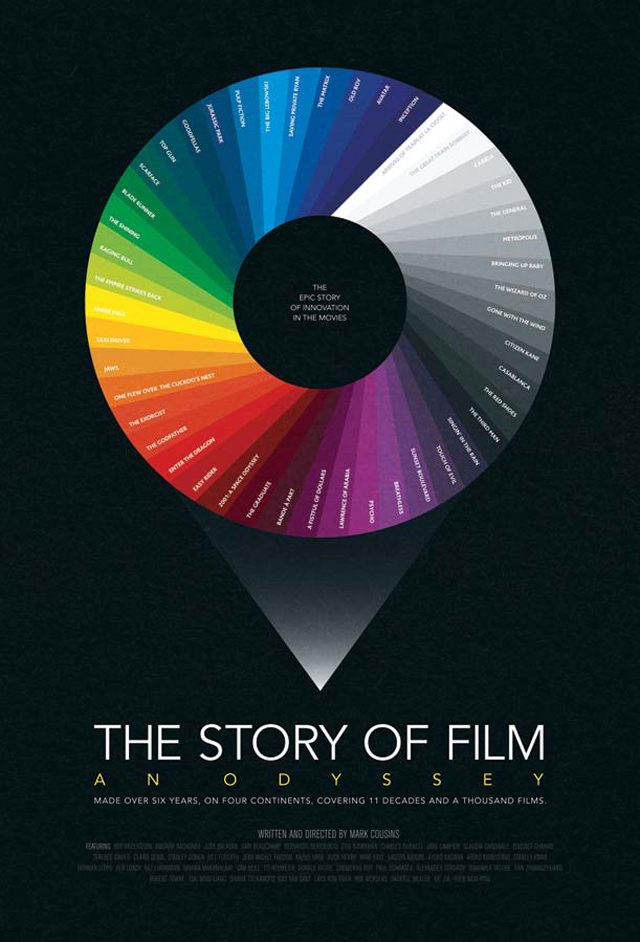
The Story of Film: An Odyssey

Written and Directed by Mark Cousins

Last year Mark Cousins in conjunction with the BBC brought us a 15 part epic series entitled The Story of Film: An Odyssey. Starting last weekend and continuing through to November The Hot Docs Bloor Cinema is presenting the entire series in 2 part chunks on Sunday nights with replays on Tues nights, only taking a break to present the Toronto After Dark Film Festival in late October. Starting from back at the turn of the 20th century, The Story of Film attempts to present the most complete version of the history of film production put forward. Not content to just focus on the Hollywood scene, Cousins spans the globes for the most influential films and filmmakers of their time and presents their stories in detail.

The first two episodes cover the start of film, from the 1890’s through to the 1920’s/30’s, and show us the innovations from across the globe, many of which still apply today. We delve into the careers of Harold Lloyd, Buster Keaton and Charlie Chaplin while also investigating the seminal films Birth of a Nation, The Passion of Joan of Arc and many more. Cousins has certainly done his homework as the film is chocked full of details that even the most hardened of film historians may not know. His depth of research is certainly astounding and furthermore the amount of footage he has access to is stunning. Some of these films have probably not been projected since they were first put in theaters.

Dry in parts because of the sheer amount of knowledge being displayed, The Story of Film: An Odyssey is a MUST SEE for any true cinema lovers. This is the most comprehensive dissection of film’s history ever put together. Do yourself a favor and get out to the Hot Docs Bloor Cinema and catch as much of this as you can. For more details on show times consult the Hot Docs Bloor Cinema schedule.

Till Next Time,

Movie Junkie TO

Make sure to keep up with what’s going on at Entertainment Maven by liking our Facebook page and having updates delivered right to your Facebook News Feed. It’s the only way to stay on top of all of our articles with the newest blockbusters and all the upcoming films, festivals and film related events in Toronto.

Follow me directly on twitter @moviejunkieto and by liking my Facebook page at Movie Junkie TO

Email me at moviejunkieto@gmail.com

Arbitrage Review (Paolo Kagaoan)

Photo courtesy of VVS Films

Arbitrage (2012)

Starring Richard Gere, Susan Sarandon, Brit Marling, Laetitia Casta, Tim Roth and Graydon Carter

Directed by Nicholas Jarecki

MINOR SPOILERS

Robert Miller (Gere) is a self-assured second-generation business mogul. He has a measured self-effacement while giving one of many interviews that he gives to glossy publications. He’s celebrating his birthday with the three generations that make up his family but he whisks away because of work. Let me remind you that his wife Ellen is played by Susan Sarandon and that ‘work’ means he’s cheating on her. May God have mercy on his soul for I won’t.

The mistress is a needy French artist (Casta) who is angry at Robert for being late for his second birthday party. I don’t know if I sound soulless, but she doesn’t realize that Robert is a big shot Wall Street type who doesn’t have time for the people he supposedly loves. Hence, the dilemma of adultery of having to pleasure two women during one lifetime, the woeful predicament of someone who doesn’t want to tell one of them to eff off. Impulsively and out of guilt, he invites her to a weekend tryst fest on one of his properties upstate. They look like a movie couple until a fateful car accident. It’s a jolt that seems to make this different from your average movie about a troubled tycoon, unflinching in showing the woman’s death, giving its protagonist a bigger burden than he already has.

Oh, and one more thing, he’s a fraudster.

Photo courtesy of VVS Films

Keeping up appearances is naturally exhausting as Robert spends most of the time begging for mercy or money after his problems get exposed. Cases could be made for both, but I’ll say that he’s a passive protagonist. The movie finds a balance. He begs without looking needy or pathetic. From these moments we the audience can’t fully sympathize for him and we want him to be punished, yet we acknowledge that – and the masculine Stoicism within Gere’s deservedly praised performance helps in this point as well – he’s not a purely evil person.

Photo courtesy of VVS Films

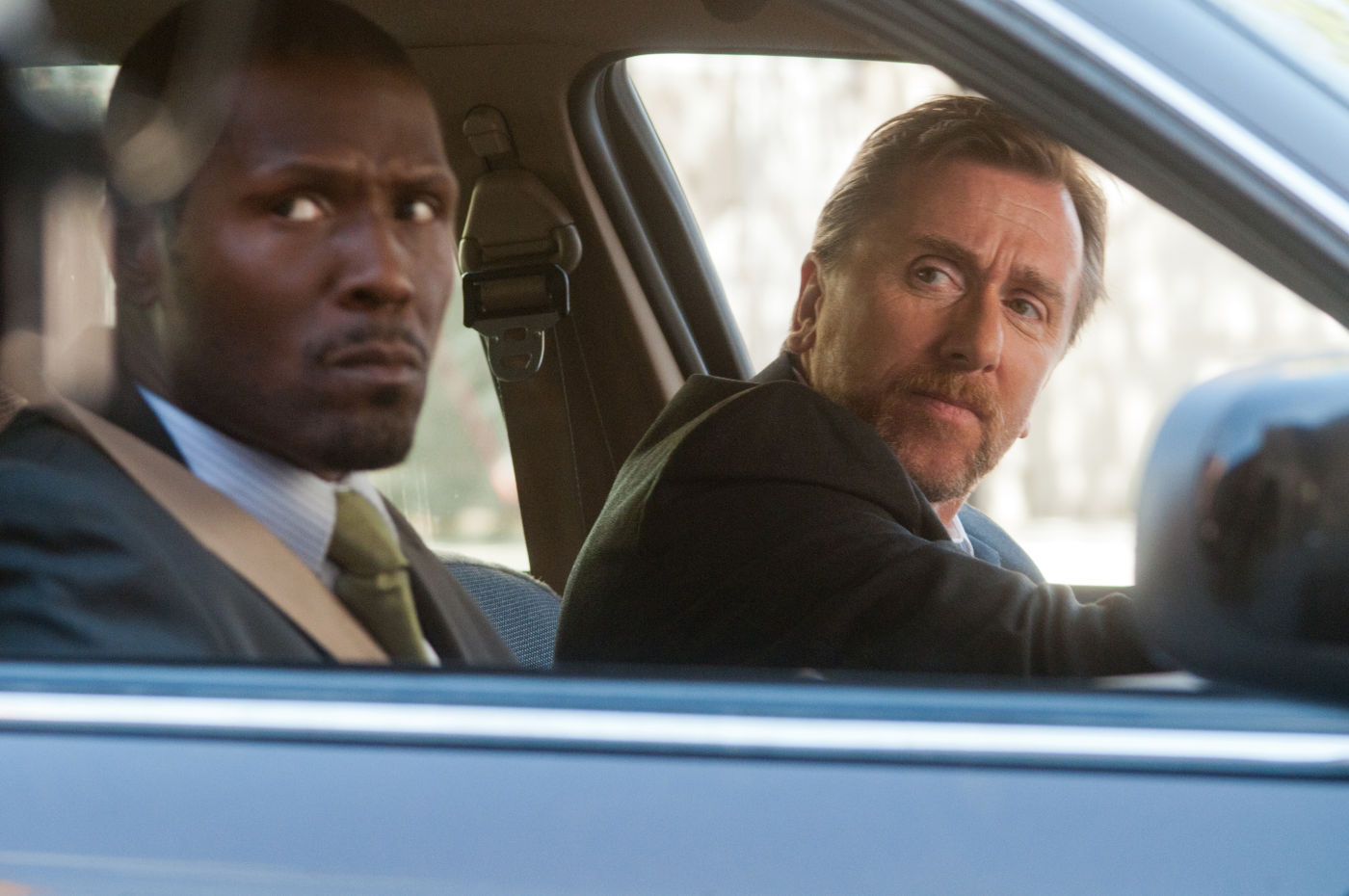
To book him for either of his crimes, there are outside forces like Tim Roth’s street smart character Det. Michael Breyer, the actor stealing every scene he’s in. He’s growing into his age. But despite his bravado he’s more efficiently grilled on the inside by the two most important women in his life, his wife and his daughter. It’s my first time seeing Marling on-screen and although she’s not perfect, she’s a delightful presence and is as intelligent as her character demands. She or any of the supporting characters thankfully challenge him without having the unnecessary histrionics of ‘telling him off.’ The movie surrounding these characters seem conventional, but their performances and approach comes from justice and pain, a better angle than heavy-handed Schadenfreude ever will be.

Photo courtesy of VVS Films

In other words this movie is about how members of the 1% are bound for deviance and how the people within their cabal inflict punishment towards their own kind. The concept itself is unsatisfying. Without giving too much away, we see the constraints against a great man only for them to unfortunately loosen.

Like Entertainment Maven on Facebook