The Man Nobody Knew Review (Kirk Haviland)

The Man Nobody Knew: In Search of My Father, CIA Spymaster William Colby

Directed by Carl Colby

Carl Colby’s father William did not have the average 9-to-5 American job. Part quest to enlighten the masses as to exactly what his father was responsible for and part personal exploration, The Man Nobody Knew uses a multitude of historical footage to tell its story. With Carl narrating we get a series of personalized interviews, many addressing Carl directly instead of just the camera, with many important present and former government personnel and recognized historians to flesh out the history of this man.

Photo courtesy of First Run Features

Starting with Pearl Harbour and his father’s enlistment into the infantry, Carl describes the ambition his father had and sense of duty. Many years after the family finds out that William is not quite working for the employers they had in mind, when the neighbours he carpooled with noticed him leaving where he was supposedly working for somewhere else. Fearing that the Italians might be communist, Colby and clan are sent to live in Rome. Keeping his family mostly in the dark, Colby was able to use his family dynamic to ingratiate himself with the powers that be. Something he used to great advantage as he was moved to Vietnam in 1959 and became a beloved advisor to President Diem before the war started.  Leaving in 1962, Colby became an advisor for all Asian affairs in the CIA. His replacement, Henry Cabot Lodge, was the man whose actions led to the coup and assassination of President Diem and the beginning of the Vietnam War. Returning years later, in 1968, Colby instituted many programs, including the controversial Phoenix program for intelligence gathering, intended on turning the tide of the war. Phoenix ended up backfiring dramatically and making him a pariah both abroad and at home with the millions of protesters lining the streets. After returning from Vietnam in 1971 he is named Director of the CIA by Richard Nixon in 1973, unaware of the black ops occurring under Nixon’s commands including Watergate. Colby is credited with keeping all the secrets and the Intelligence agency alive and functional during these times. Colby would not end up serving as Director very long, as he was replaced by George Bush Sr.

Photo courtesy of First Run Features

The Junior Colby’s exploration into his father’s life is really a hit and miss affair. Playing out like a History Channel documentary with tons of footage, The Man Nobody Knew as a theatrical outing is very dull. While the story behind the man provides many fascinating insights, the way they play out in a standard flat style with footage and standard interviews against a plain background leaves something to be desired. Colby as a narrator does not work. Lacking emotion and using a monotone delivery and unsatisfactory blend of personal and impersonal style, Colby’s observations are blunt and sometimes completely unearned. The film’s narrative plays out more as a barely animated linear description of events than that of a storyteller trying to tell us of a fascinating character in the history of the United States Intelligence community. The lack of storytelling prowess leaves us with a dull ineffective narrative that makes the film a tough watch to get through. For a film subtitled “In search of my father” the junior Colby spends a staggering brief amount of time talking about the man over his exploits. In fact the brevity and lack of exploration shown on screen to the last 10-15 years of the senior Colby’s life leaves us as a,n audience, very unsatisfied. After seeing this type of story done so successfully earlier this year with “My Father and the Man in Black“, The Man Nobody Knew’s shortcomings are even more glaring.

While it does have some fascinating info and clips dealing with the history of the United States during some very turbulent times, as a film The Man Nobody Knew does not hold up. The Man Nobody Knew: In Search of my Father CIA spymaster William Colby is a non-recommend.

The Man Nobody Knew starts an exclusive 4-day run at the Hot Docs Bloor Cinema on Monday August 6th. Details can be found on their website schedule.

Till Next Time,

Movie Junkie TO

Make sure to keep up with what’s going on at Entertainment Maven by liking our Facebook page and having updates delivered right to your Facebook News Feed. It’s the only way to stay on top of all of our articles with the newest blockbusters and all the upcoming films and festivals in Toronto.

Follow me on twitter @moviejunkieto

Contact me at moviejunkieto@gmail.com

Fantasia 2012 – Game of Werewolves Review (Matt Hodgson)

Fantasia Film Festival 2012

Game of Werewolves (2012)

Starring Gorka Otxoa, Secun de la Rosa, and Carlos Areces

Directed by Juan Martinez Moreno

The blending of the horror and comedy genres has resulted in some of my favourite films of all-time. From the ridiculous blood bath in Peter Jackson’s Dead Alive to the everyman suburban horror on display in Joe Dante’s The Burbs; when executed properly filmmakers can really hit a home run in this genre. However, it’s hard enough to make a successful pure comedy or horror movie as it stands, let alone blending two seemingly polar opposite genres. Many have tried and few have succeeded. Fortunately, even through the translation from Spanish, Moreno had his fingers on the pulse of the horror/comedy genres and has created one of the best werewolf movies of recent memory.

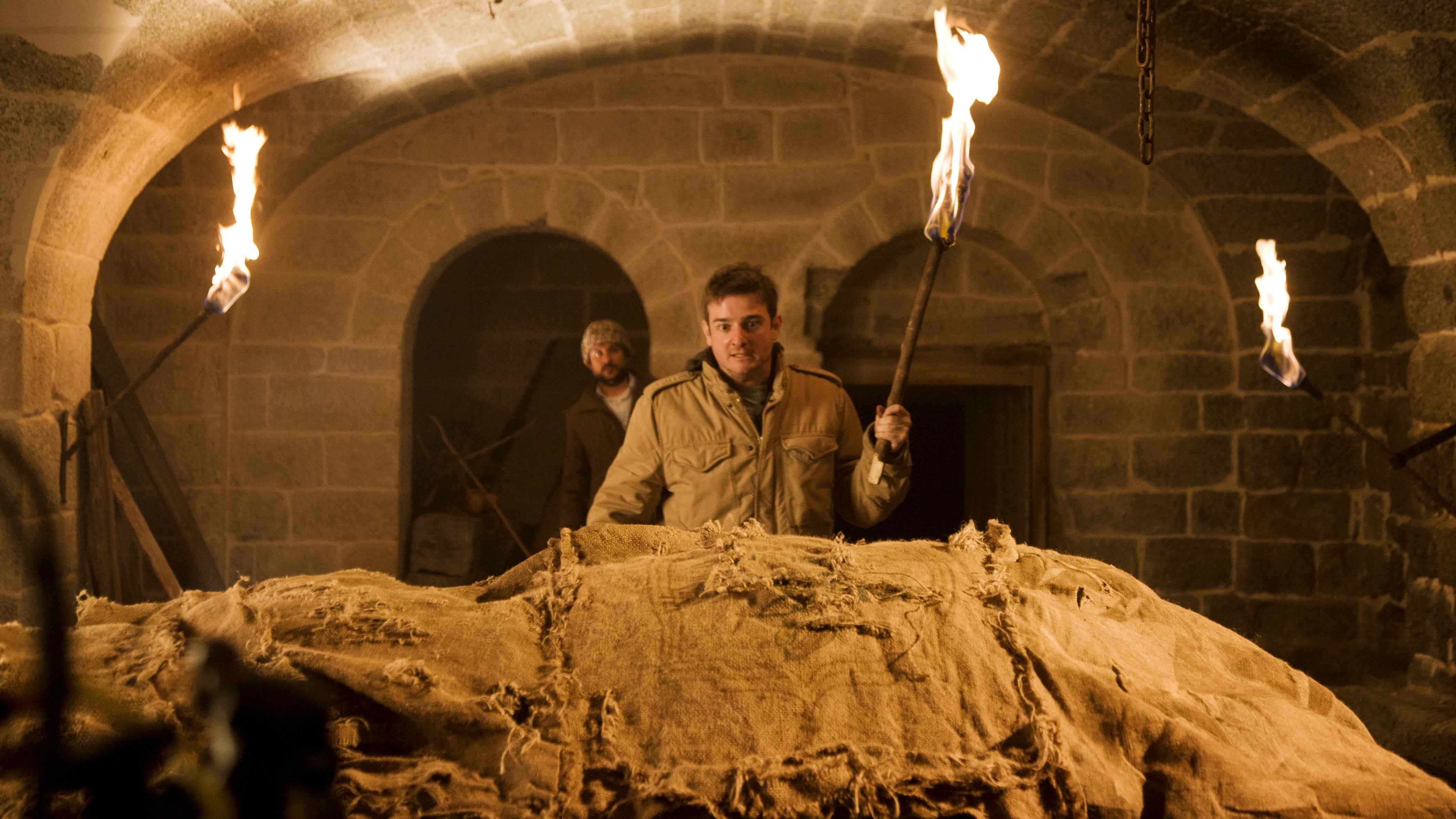
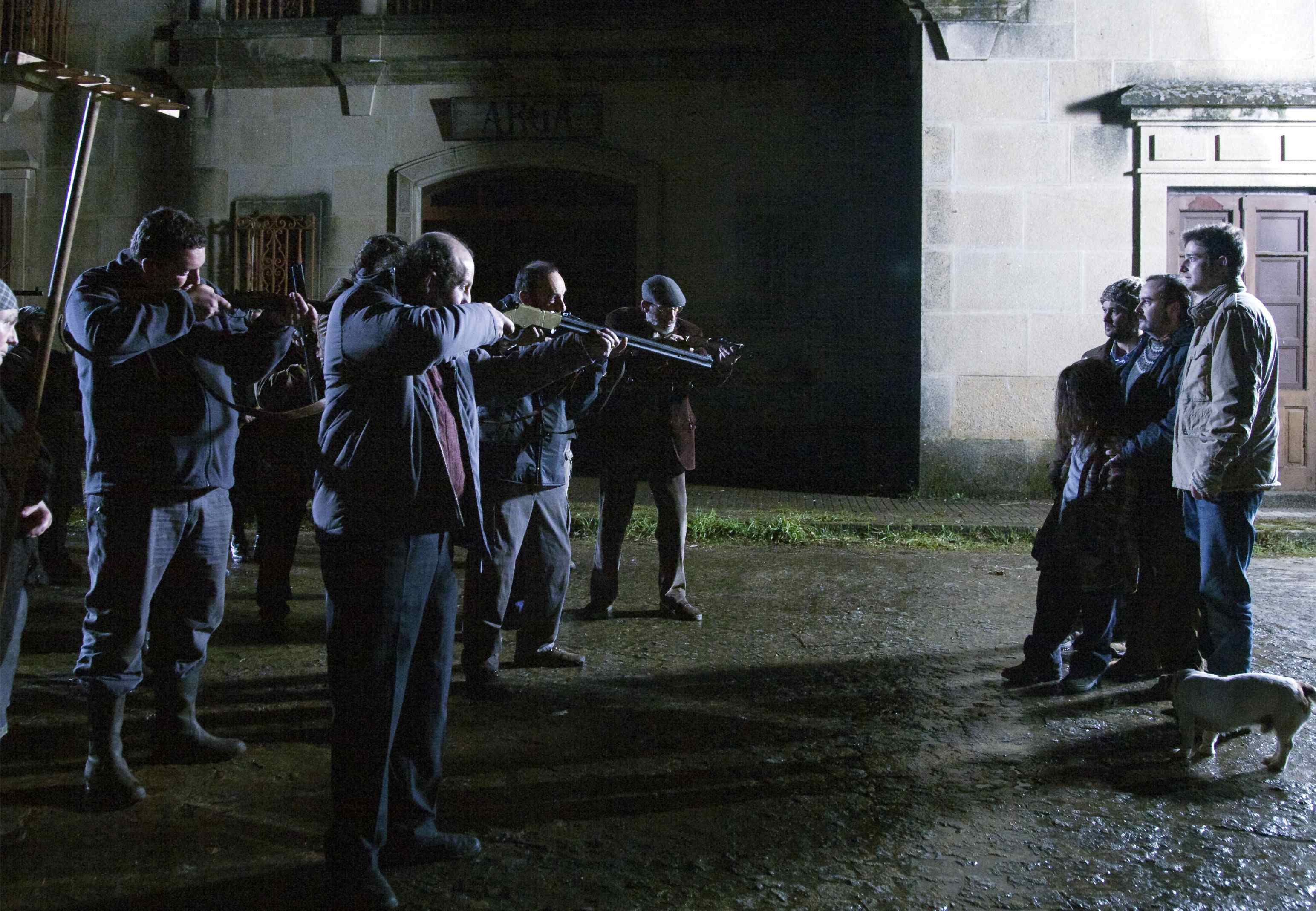
Tomas (Otxoa), like many struggling writers before him, has decided to retreat to a quiet country home to work on his second novel. Luckily for him he has the perfect location in his home village of Arga, and to top it all off, the mayor has invited Tomas for a special ceremony to receive an award for his success with his first novel. Making his home in a huge country house left to him by his parents, Tomas readies himself for some serious writing and just maybe a little handshaking with the locals as he has no doubt become a celebrity here. But writing time is hard to come by as Tomas meets up with his somewhat intrusive childhood friend (Areces), as well as Tomas’ sleazy Editor (Rosa), who is always trying to escape one criminal charge or another. However, Tomas’ novel is quickly shown to be the least of his concerns as it’s revealed that the villagers may have a more sinister reason for welcoming the young writer back to the town of Arga.

Game of Werewolves starts off with plenty of charm and comfort as we accompany Tomas into the quiet village of Arga. The countryside and the large country house that Tomas calls home are absolutely gorgeous to behold. Moreno and company certainly know how to make a product with a very professional feel despite a relatively low budget (at least when compared to Hollywood fare). The filmmaking know-how continues into the realm of characters and character development as Tomas, his friend, and his Editor rarely have overlapping traits and all feel like equally interesting characters. The performances by Otxoa, Areces, and Rosa only improve these characters as all three men contribute to a wonderful onscreen group dynamic.

It took a little bit of time for the comedy in Game of Werewolves to get rolling, but when it did it hit really hard. There are plenty of funny moments in the movie, but there are also multiple riotous moments. I don’t often laugh this hard in a theatre. Unfortunately, as with any comedy with subtitles, English speaking audiences are going to miss out on some of the jokes and comedic timing. I couldn’t help but feel I was missing out on Rosa’s comedic timing in particular, as some of his punch lines were displayed onscreen as subtitles before he actually spoke the line. A minor complaint as Rosa has plenty of wonderful physical comedic moments, I just wish I could have appreciated his dialogue driven comedy as well.

Another great aspect about the movie are the practical effects. During the Q&A Moreno spoke candidly about the prevalence of CGI in transformation sequences (werewolves) and his love of the practical transformation and werewolves found in classics, like American Werewolf in London. Despite the budget, the practical werewolves on display in Game of Werewolves look great and are perfectly suited for the horror/comedy that Moreno has made. While the werewolves look great, I have to admit that they get knocked down or killed a little too easily for my taste.

Game of Werewolves has been getting a great response on the festival circuit so far, and the stop off in Fantasia is another notch on the belt for Moreno. If you’re a horror/comedy fan, do yourself a favour and check out Game of Werewolves when you get the opportunity. A rip-roaring good time and one of the best werewolf movies in years, Game of Werewolves is best viewed with a warm audience where the laughter is infectious.

Like Entertainment Maven on Facebook

Fantasia 2012 – Citadel Review (Matt Hodgson)

Fantasia Film Festival 2012

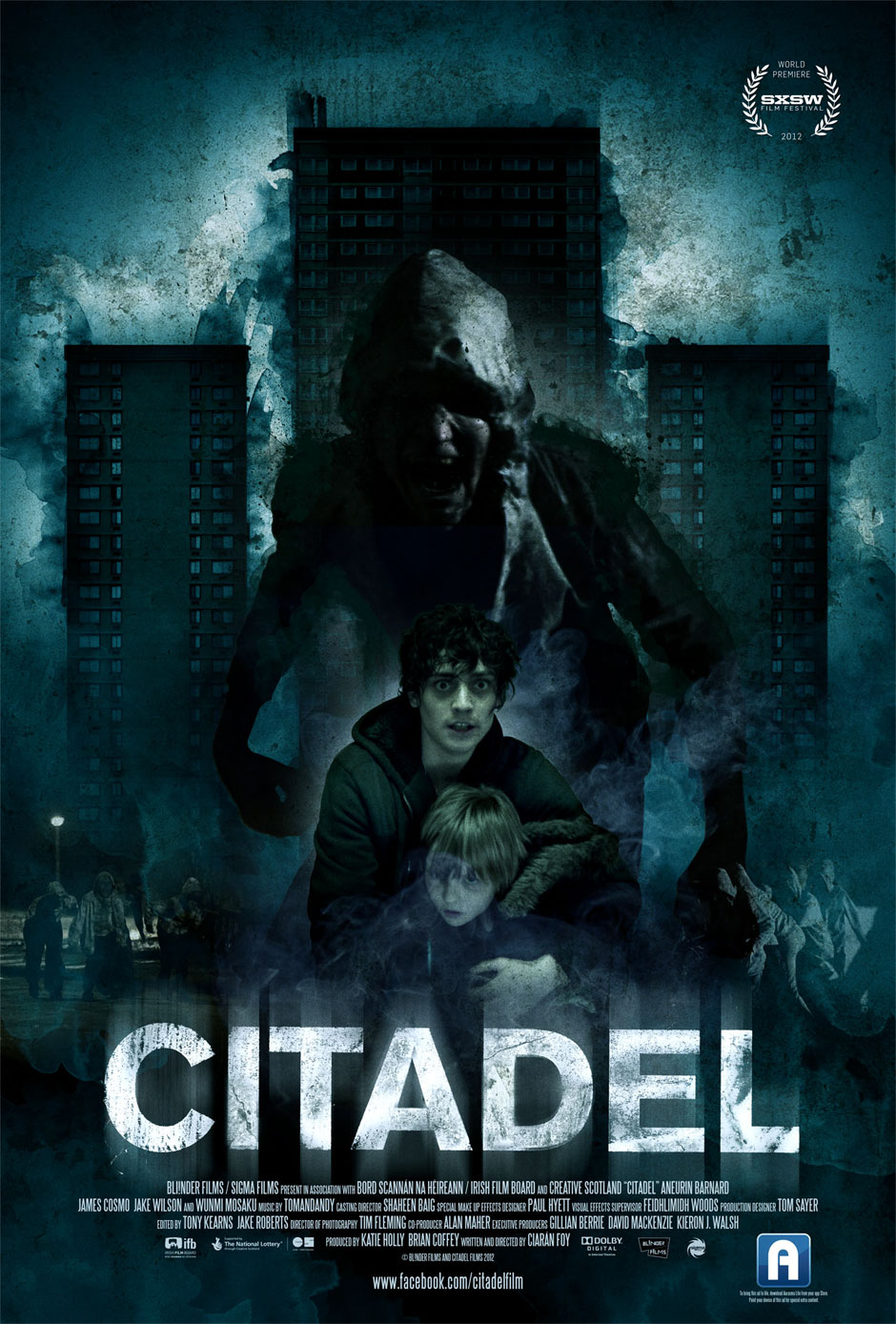
Citadel (2012)

Starring Aneurin Barnard, James Cosmo, Wunmi Mosaku, Jake Wilson, and Amy Shiels

Directed by Ciaran Foy

Citadel is one of the few true horror movies being screened at Fantasia 2012. This doesn’t say anything negative about the programming at Fantasia, but rather draws attention to the crop of horror movies available at festivals this year. Citadel is a production out of Ireland that feels low budget at times, but at others manages to make you forget about the budget. At the heart of the movie is a scary horror story that has something to say about victimization and crippling personal fear, a refreshing experience given some of the uninspired horror films of recent memory.

Tommy (Barnard) and Joanne (Shiels) are young soon-to-be parents who also happening to be hovering somewhere around the poverty line given that they live in a decrepit tower of apartments that should probably be condemned. While leaving their home one day the young couple is viciously attacked by a small group of hooded children. The only thing more emotionally devastating that the attack itself are the results. Subsequently, Tommy battles with agoraphobia, only leaving his home for therapy sessions, and a specific fear of the hooded children who perpetrated the attack on him and Joanne. Despite having already ruined his life, it seems like these monstrous children haven’t quite forgotten about Tommy and are far from finished with him.

Citadel is clearly a low budget movie at times, while at other times the filmmakers manage to hide this fact well. Independent filmmakers rarely have their pick of locations, however the location chosen for the majority of the first half of the film grows tiresome very quickly as we spend most of our time locked in a small apartment that doesn’t seem as cinematic as it should have. I understand that the setting was necessary to the story as Tommy battles his phobia, but it feels like we’re with Tommy in that apartment for an eternity. Fortunately for viewers, the second half of the film really opens up, with some very different locations that feel much more suitable for the big screen. An extremely creepy pedestrian tunnel and an old apartment building provide the perfect environment for the hooded children to get up to some serious mischief. Aside from the criticism of the apartment location I found Citadel to be a fairly visually impressive movie. The colours used are almost always faint or washed out, mirroring the state of Tommy’s life. The hooded children are scary adversaries for our hero, especially when they are creeping around as a small pack of two or three in the middle of the night.

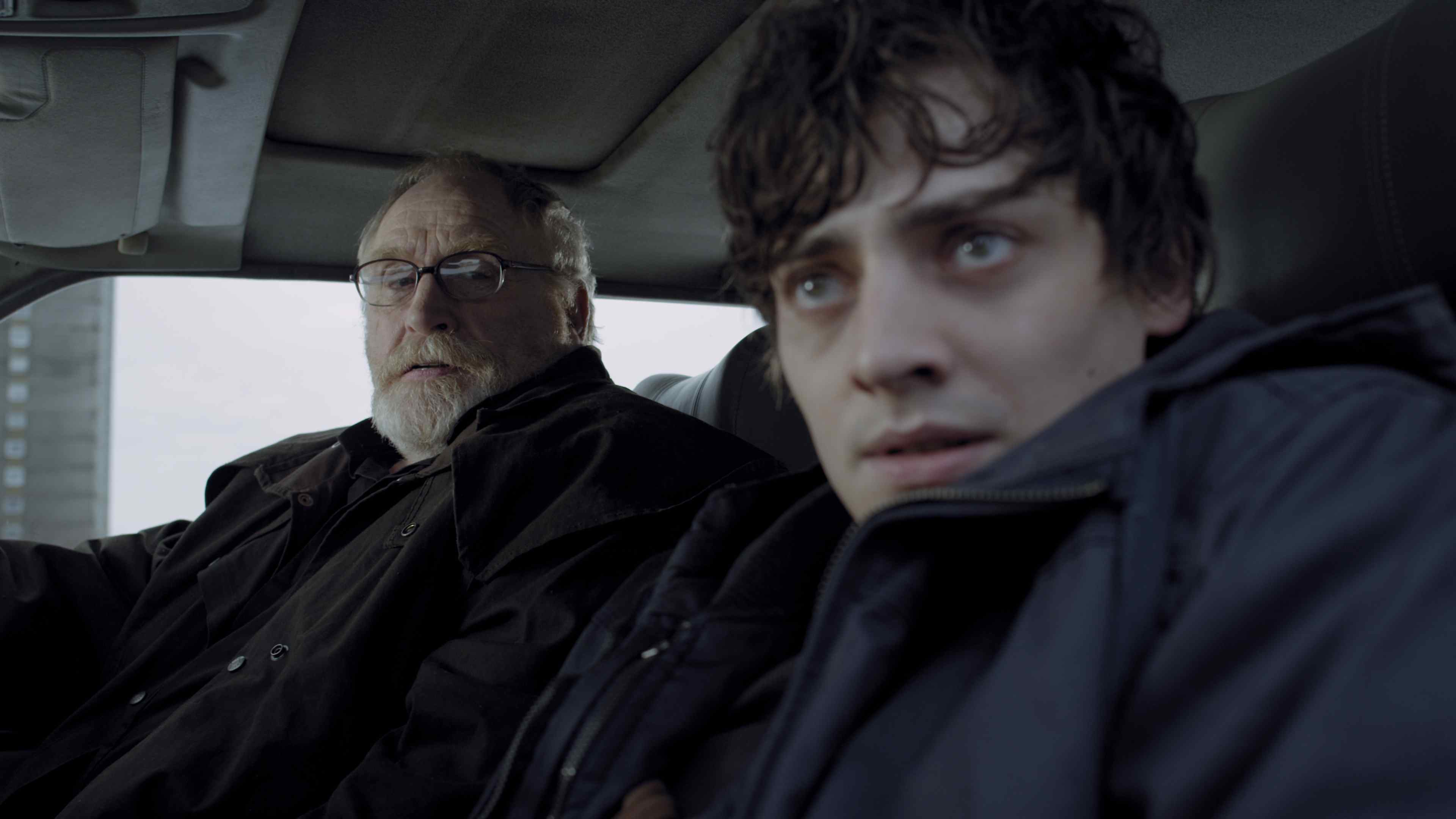
Considering how much time we spend with him, nearly the entire film rests on the shoulders of Barnard and he delivers in spades with an excellent performance of a young man whose life has clearly been shattered, but who still manages to convey a sliver of hope and strength to turn his life around. A character this broken could easily become a little too much for an audience to bear, thankfully this is not the case with the role in Barnard’s hands. Complementing Barnard is the performance by James Cosmo as a foul-mouthed priest. Cosmo has a great dynamic with Barnard, as he provides a degree of toughness and bravery that Tommy understandably lacks.

Finally, as mentioned earlier when discussing the locations, the pacing of the film starts off well, but staggers a bit during the first-half of the film. The second-half really picks up and treats the audience to a thrilling conclusion. A particular explanation/twist near the end of the film felt completely unnecessary and a little ridiculous, but it was easy to shrug it off as it wasn’t really emphasized.

While it is not without it’s flaws, Citadel was definitely one of the strongest true horror films at Fantasia 2012. An interesting plot and a strong lead performance make this one easy to recommend.

Like Entertainment Maven on Facebook

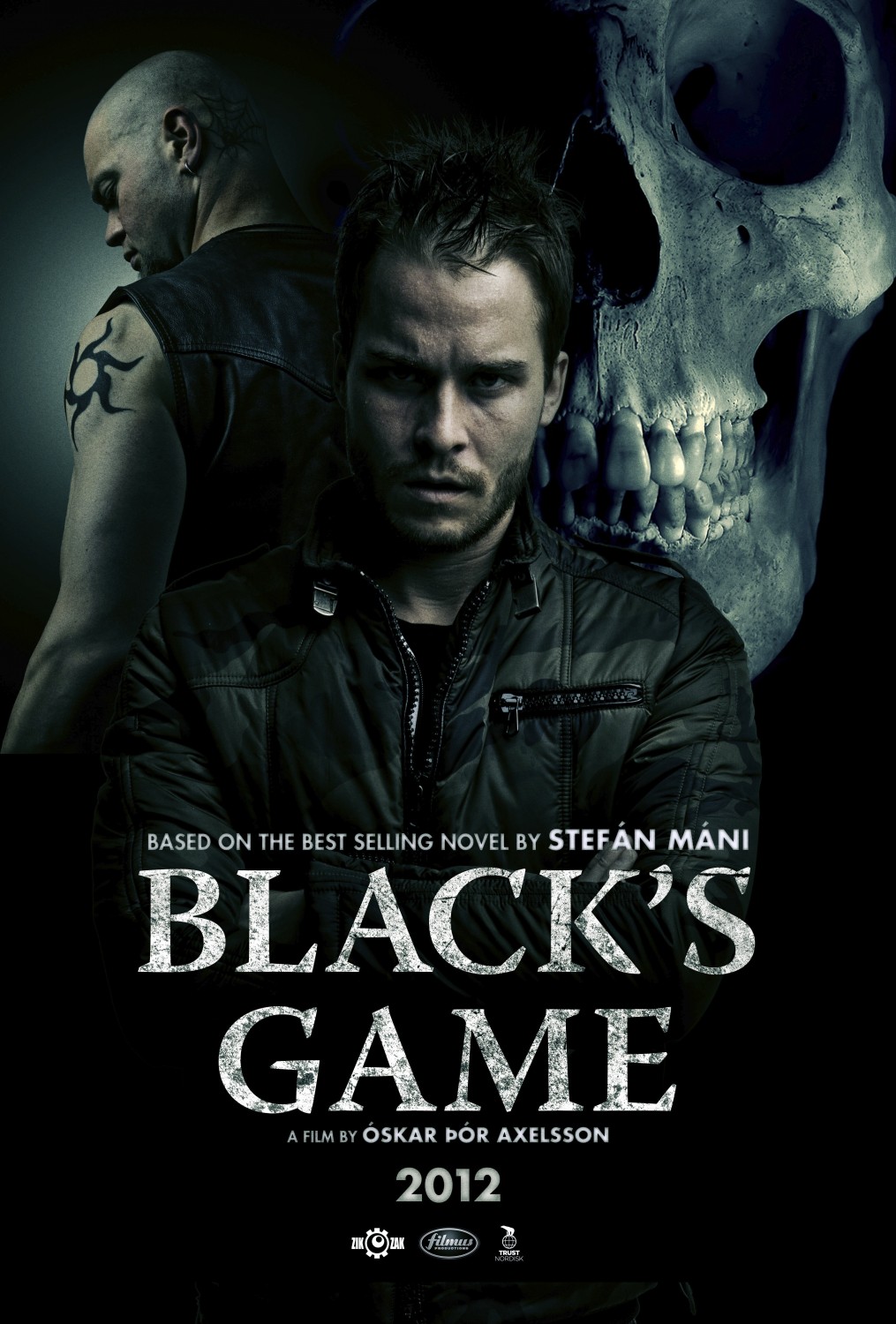
Fantasia 2012 – Black’s Game Review (Matt Hodgson)

Fantasia Film Festival 2012

Black’s Game (2012)

Starring Thor Kristjansson, Jóhannes Haukur Jóhannesson, and Damon Younger

Directed by Óskar Thór Axelsson

The focus for my Fantasia festival has been horror, animation, and Asian cinema. Therefore, I’m utterly clueless how an Icelandic drug dealing movie worked it’s way into my schedule, but I’m glad it did. Although Black’s Game may not be the most original movie at this year’s festival, I think that scores of filmmakers could learn from the plentiful excitement and the near-perfect pacing on display.

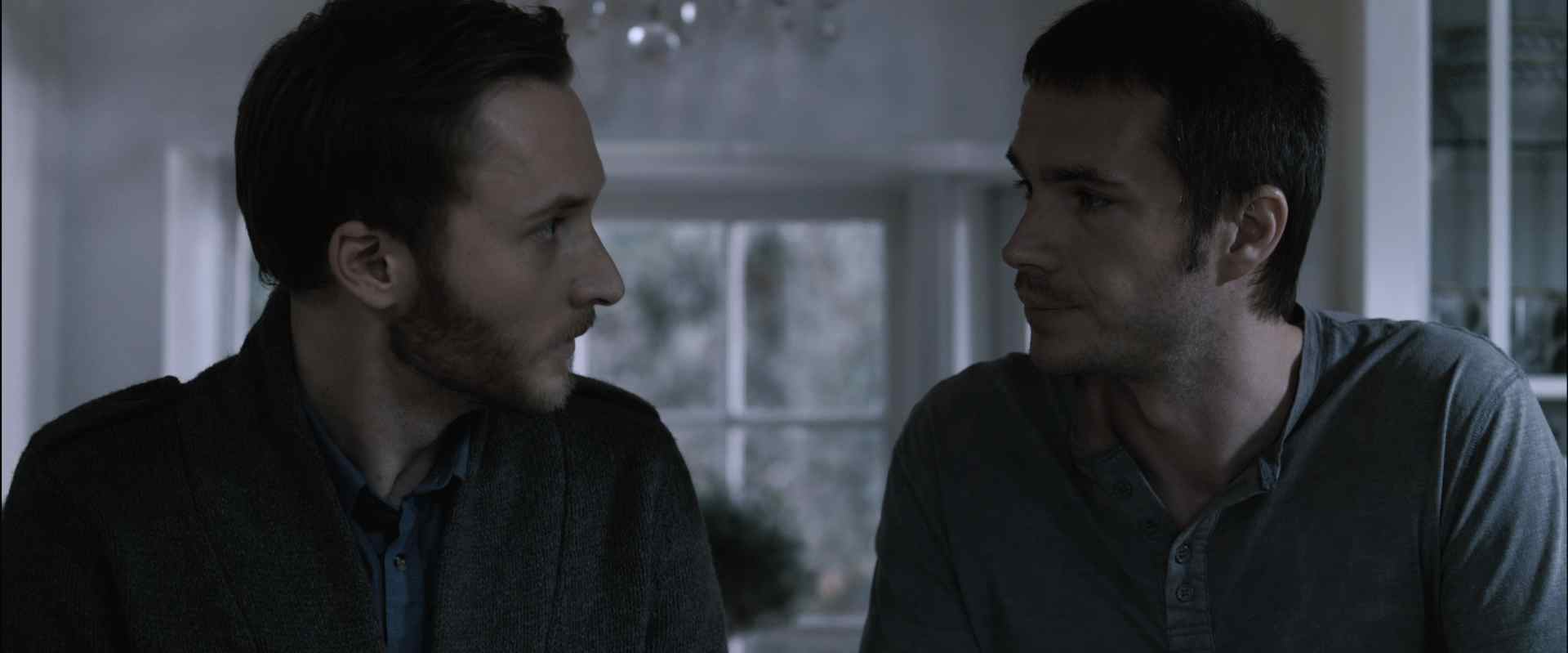
As a young man, sometimes during a night out you can have too many beverages. Sometimes when you have too many beverages you can do something stupid. Sometimes when you do something stupid the consequences can be devastating. This is exactly the path that young Stebbi (Kristjansson) finds himself on after he drunkenly breaks a glass on a young man’s face and finds himself with an upcoming court date which could land him in prison for a few years. Purely by chance, Stebbi runs into his old friend Tóti (Jóhannesson) who claims he can set Stebbi up with a lawyer to get him off the aggravated assault charge. Stebbi takes Tóti up on his offer and as a result a reciprocal favour, finds himself a part of Tóti’s inner drug-dealing circle. Not only that, but a particularly violent incident with a baseball bat sees Stebbi renamed Stebbi Psycho, and it’s not because of his batting average. The rest of the story follows these young men as they get immersed in the world of the Icelandic drug trade.

It’s hard for me to get excited for a drug movie because they seem so mundane. Drug traffickers are constantly on the news. In high school everyone was familiar with who had their hand in the pocket of this particular ‘business’. And most importantly, there are a ton of drug movies. The concept is very accessible for independent filmmakers, but Hollywood has also had more than their fair share of drug themed movies. Like zombies and vampires in the horror genre, it seems like the drug trade in film needs a new spin. Now I’m not sure how original Black’s Game is, it may not be original at all except for the cold Icelandic setting. However, Black’s Game reminded me why it can be rewarding to revisit a tired genre if the filmmakers pay particular attention to the storytelling.

From start to finish Black’s Game is paced almost perfectly. We begin with a fairly stupid and brash version of Stebbi, someone who is easy to identify with because of his youth. Stebbi gets sucked into Tóti’s world, and not totally against his will, an aspect that ensures Stebbi stays a multi-dimensional character and not simply a frightened prop to be moved from scene to scene. There is always something happening on the screen in Black’s Game, whether it be violence, sex, double-crossing, revenge, or fraud, and it never seems like overkill. Add to this some of the most excellent pacing that I have seen at Fantasia 2012 and the 100 minute run-time feels short.

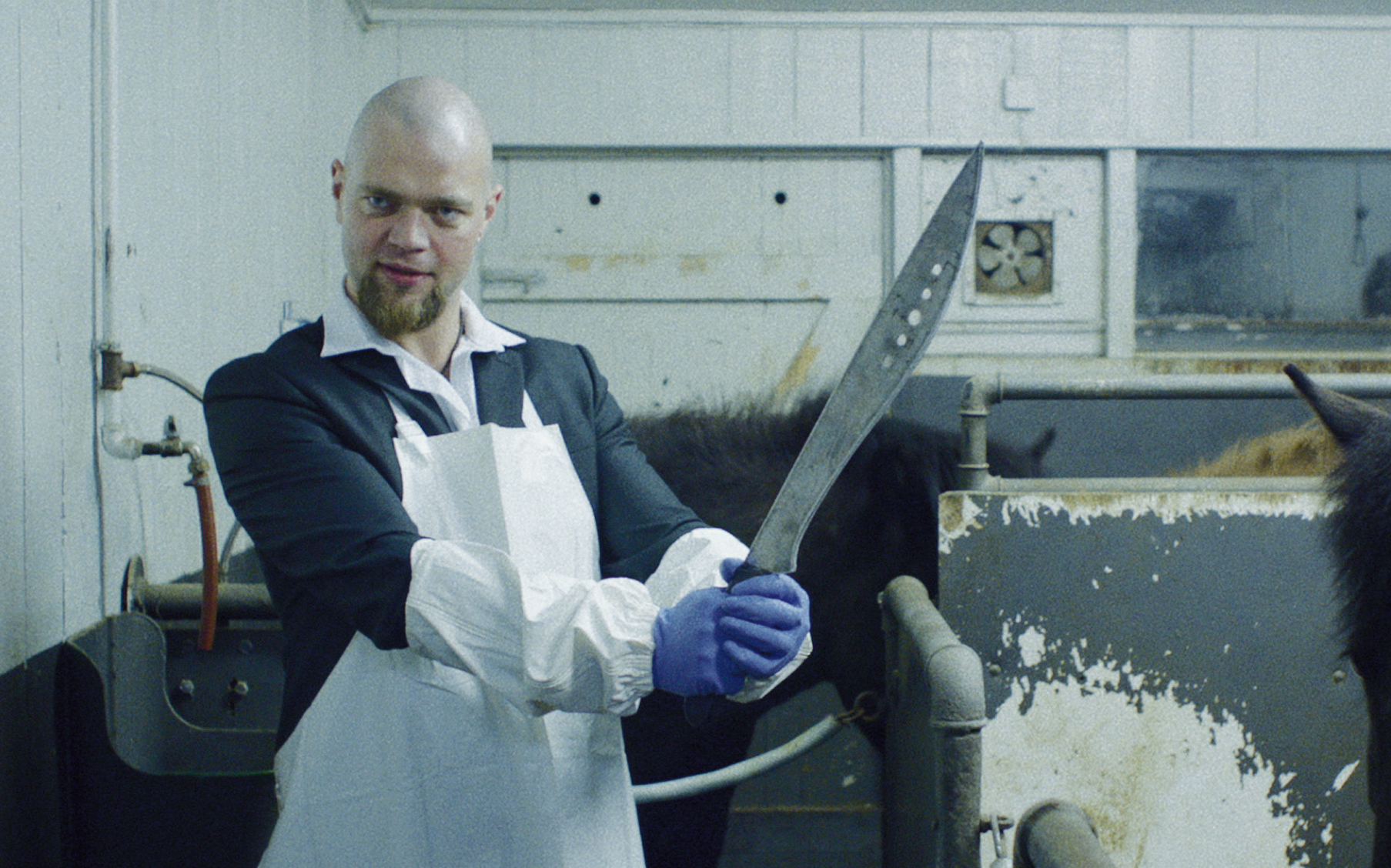
While Kristjansson does a great job as Stebbi, a fairly regular guy who makes some bad decisions and becomes enamoured with the flashy world of drugs. However, my favourite performances came from the supporting cast filled with scumbags, murderous madmen, and rats. Jóhannesson (Tóti) and Younger (Bruno) as particularly captivating as sociopaths who absolutely ooze criminality and violence. These men made me uncomfortable sitting in my seat – even that was too close to these guys.

Finally, the cold and unforgiving Icelandic landscapes are the perfect setting for Black’s Game, mirroring the heart of the drug trade world. Perfect for fans of the genre, but also accessible and enjoyable for those who only watch a drug-themed movie every now and then. Black’s Game is an often violent, sometimes obscene, but always stylish view of the Icelandic underworld of the 90’s. Stebbi Psycho and company are like a young pack of werewolves; the theatre screen is as close as you will want to get to this unsavoury group.

Like Entertainment Maven on Facebook

Fantasia 2012 – Replicas Review (Matt Hodgson)

Fantasia Film Festival 2012

Replicas (2012)

Starring Selma Blair, Josh Close, Rachel Miner, and James D’Arcy

Directed by Jeremy Power Regimbal

After a brief reviewing hiatus at Fantasia to try and keep my sanity intact, I’m back. For the past few days it has seemed like I’ve been picking the wrong screenings. I’ve seen some mediocre movies over the past few days, but nothing really good. As usual, it always seems to be the movies that I know nothing about, and therefore have no expectations for, that seem to be the winners. Replicas, the directorial debut from Jeremy Power Regimbal, pleasantly surprised me and was filled with cleverly written dialogue and excellent acting anchored in an environment filled with off-beat comedy and bizarre social situations.

Mark (Close) and Mary (Blair) have retreated to a lovely forested home with their son in order to escape a world of hurt. Not long ago their young daughter died in a tragic accident and the wound has never healed. Not only do Mark and Mary miss their daughter every day, but they are finding themselves drifting apart emotionally. Their stay at a beautiful vacation home is a last effort to try and grow close again, in addition to giving them the peace and solitude needed to heal as individuals. Unfortunately for them, the neighbours happen to be bizarrely intrusive and incredibly socially awkward. After the neighbours invite themselves over for dinner, the reluctantly budding relationship between the two families takes a dark turn and the sensitive details of Mark and Mary’s loss and struggling relationship are on display for all to see.

Replicas is a very impressive debut for Regimbal, particularly concerning the beautiful visuals found throughout the film. The story calls for fairly generic locations: a house, a forest, a bridge, but the actual locations selected, particularly the house, are gorgeous to look at. Of course the very professional photography certainly plays a role in making these locations pop off the screen onto our retinas. Replicas is most likely a low budget movie, but you would never guess it from looking at it.

The performances are also quite impressive. Blair and Close are great in the roles of a devastated mother and father, but my favourite performance had to be the deliciously quirky one turned in by James D’Arcy as Bobby. Although D’Arcy may be the best at it, the entire cast of adults all seem to have their fingers on the pulse of the awkwardly comedic dialogue exchanged as the two families get acquainted.

The script is incredibly well-written in terms of dialogue and pacing, setting itself up for something very original but eventually settles for the everyday, at least as far as the film world goes. My biggest problem with Replicas was the direction chosen for the plot. This is not a technical criticism, more of a storytelling one. Despite the hugely entertaining dynamic between the ‘normal family’ and the ‘crazy family’, the filmmakers decided to follow a certain twist early on in the movie which felt a little safe considering the unusual first 30 minutes or so. I understand that the filmmakers had a specific story in mind, I just wish they could have been a little more daring. However, with a directorial debut it’s hard to fault Regimbal, as Replicas is very funny, entertaining, twisted, and has an exceptionally professional feel to it. One of the best movies I’ve seen at Fantasia 2012, Replicas is recommended for the wonderfully original first segment alone, although the entire film is certainly worth your time.

Like Entertainment Maven on Facebook