INSIDE OUT 2012 (Toronto) – Stud Life (Paolo Kagaoan)

INSIDE OUT 2012 (Toronto)

Stud Life

Directed by Campbell X

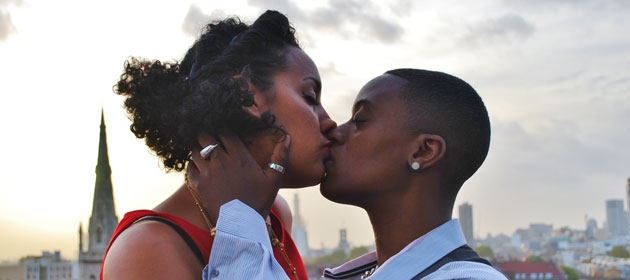
Stud Life isn’t a misnomer if you know your way around the esoteric and complicated slang of its setting. In London, ‘stud’ is a colloquial term a butchy lesbian, and both concepts aren’t mutually exclusive, by the way. And it also seems that it is applicable to masculine lesbians of colour who wear their pants low like boys in the hood do, just like the movie’s protagonist JJ. She takes professional pictures of newlywed couples – gay, straight, trans, whatever – who seem to have married out of convenience. She also lives and shares a bed with her assistant, a white femmy quasi-hipster named Seb, both characters living comfortably and platonically together since they can’t yet find their ideal partners of the same sex. Well, Seb has a drug dealer named Smack Jack, a daintier version of Seb yearning for a love that Seb doesn’t want to return.

JJ’s loneliness won’t last long, as she, Seb and Jack enter a sequence with one of the most forgivably lowest production values I’ve ever seen in a shoestring movie. All decked out in club wear, they stand in front of what I swear looks like a storefront if not a friend’s brownstone townhouse. But they hire a tall guy with a suit and a Bluetooth earpiece and make it look like a club. Inside the club, with a whopping head count of twenty-ish patrons, is a woman named Elle who catches JJ’s eye. They meet again in another one of her wedding gigs, where they actually establish contact and arrange to go on one of many dates to come.

Being the secretive yet friskier of the two, Elle becomes a person JJ loves yet secretly fears. In this vein, can Elle stand as a character of her own or is she just a projection of JJ’s trepidations about ‘mainstream’ lesbian sexuality? If they were a straight couple and if this movie was watched by more people, some audiences would cry out that Elle’s characterization is sexist. The movie, however, gets away with this because it’s a woman writing another woman, which makes me wonder whether it’s always a male gaze when we’re looking at a woman on screen.

Anyway, JJ and Elle’s relationship is a starting point on JJ’s open discussions on being a lesbian. JJ posts videos on Myspace asking her invisible audience about how homosexuality complicated one’s expression of love towards another, whether in the bedroom or otherwise. And this movie does follow the rom-com formula of meetcute-love-separation-reunion, but there are enough permutations and observations of human behaviour in between those steps that prove the movie’s specificity.

There’s also the East End slang that reminds me of TV shows like Bromwell High and movies like Attack the Block. It doesn’t matter if JJ and Seb get gay bashed in their hood, they still love and represent it. They know that they’re still welcomed by others in the community through themselves, their friends, lovers and some neighbours. Without regionally tokenizing the characters, the movie presents a much-needed voice that queer audiences need to hear.

Follow me on Twitter @paolocase

Like Entertainment Maven on Facebook

The Blind Spot Series – The Deer Hunter Review (Kirk Haviland)

The Deer Hunter (1978)

Starring Robert DeNiro, Christopher Walken, John Savage, John Cazale and Meryl Streep.

Written by Michael Cimino, Deric Washburn, Louis Garfinkle and Quinn K. Redeker

Directed by Michael Cimino

During the calendar year of 2012 a variety of film bloggers and writers across the city of Toronto, including those at The Matinee, Toronto Screenshots and Eternal Sunshine of the Logical Mind, have been taking part in a yearlong series called “The Blind Spot Series”, where we as critics make a list of films that in one circle or another are deemed to be classics that we yet to see, and review them from the perspective of the first time viewer.  Well here at Entertainment Maven we felt like it was time to join in on the fun. For this month’s viewing I, the Movie Junkie, will be taking a look at the 1978 Academy Award winner for Best Picture, The Deer Hunter.

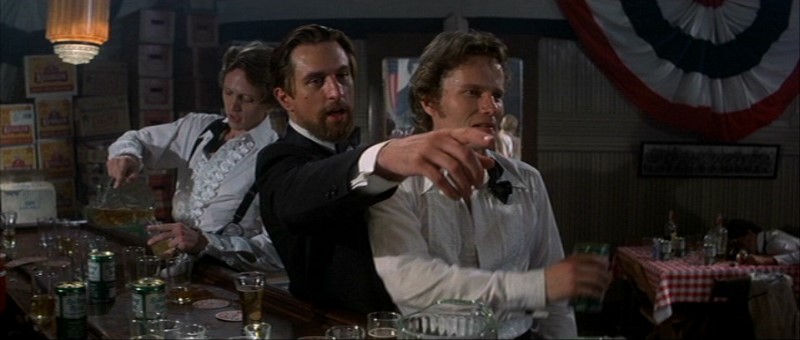
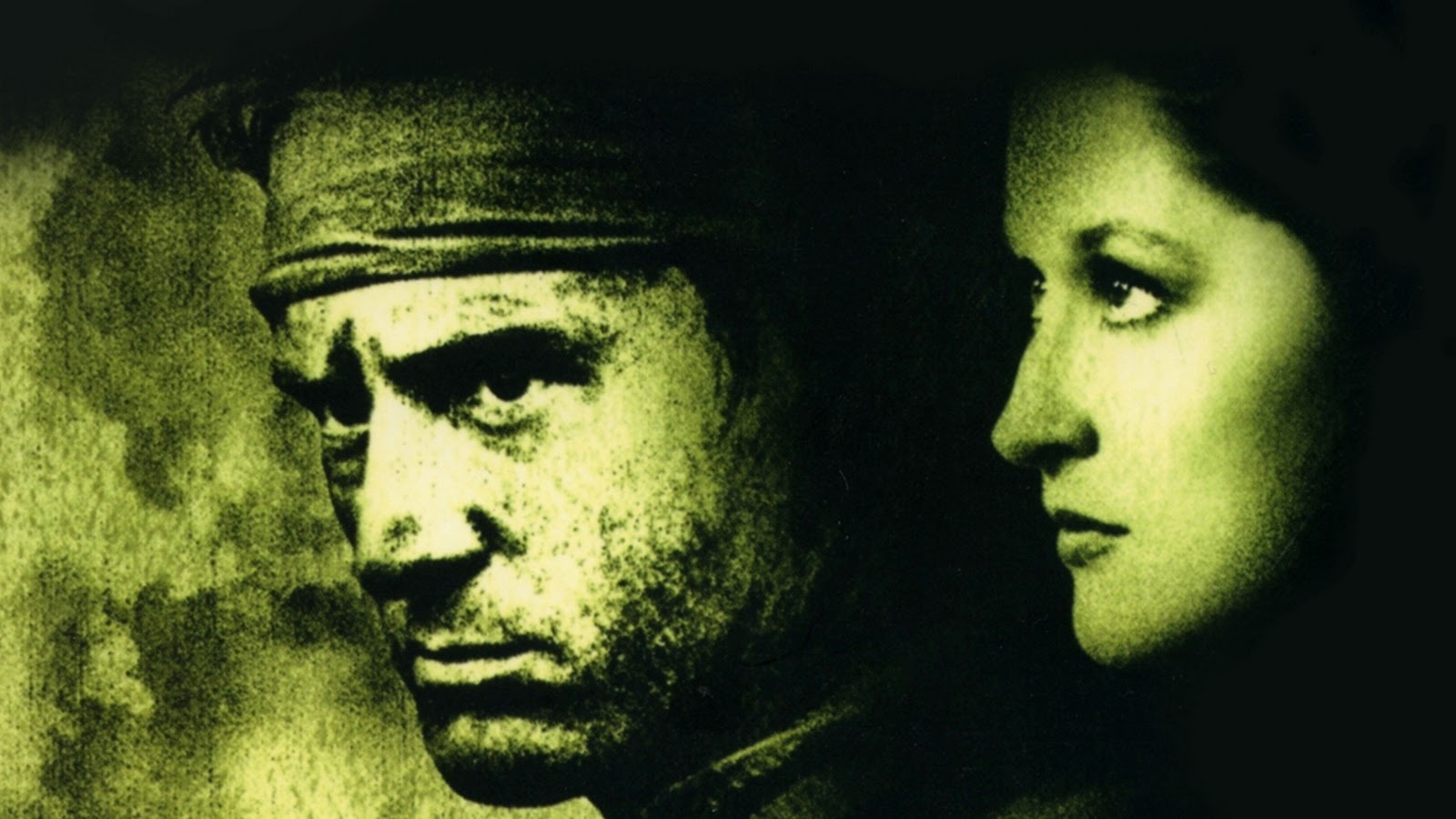
Micheal (DeNiro), Steven (Savage) and Nick (Walken) are blue collar workers from the state of Pennsylvania who, like many in the late 60’s, have enlisted in the army to go and fight in Vietnam. Steven has decided to marry the pregnant Angela the day before the three are departing for basic training. Mike and Nick, along with other best friends Stan (the late Cazale, brilliant as usual), John (George Dzundza) and Axel (Chuck Aspregren), all decide to get in one last hunt before they leave. This is where it becomes obvious that Mike is the only real hunter in the pack. Once we get to Vietnam, we see all three through non-concurrent sequences, we first discover that Nick and Steve were stationed together and Mike with another platoon. They meet up on the battlefield but are taken hostage and tortured by the Viet Cong. This is the where the infamous “Russian Roulette” sequence occurs. After the three escape, we see the drastic toll the events have taken on all three men and the way they all choose to handle the action of going home. Streep plays Nick’s would be fiancé, who also happens to have feelings for Mike, and those feelings are reciprocated. As Mike is discharged and sent home he finds that he can’t face a giant welcoming party planned for him as he knows he can never see things the same in the small town in Pennsylvania. It’s then that Mike reaches out to the other two friends, to bring them back from the brink, each in a drastically different way.

Cimino is known for his long character pieces, some more successful than others ahem …Heaven’s Gate, and Deer Hunter is no different clocking in at three hours. But even at this running time parts of the film feel truncated as I’m sure there was a 5-hour-plus cut around somewhere before final editing. DeNiro excels as usual, he was especially phenomenal through the 70’s and 80’s, as his Mike is the one who remains the closest to sanity and determined to get all three of them home alive. Walken is pitch perfect, in what was his first major role, as Nick who slowly unravels due to the torture he has endured. Savage is great in what was also his first major role as the loveable Steve, who goes through the biggest physical transformation of the three. Cazale and Streep are cast in the roles of the loved ones left behind, and they ground the film, highlighting just how much the three have changed once back in Pennsylvania. The film’s first hour is the build-up to the trio leaving, with them leaving the night shift at work, straight to the local bar, and then prepping for Steve’s nuptials and the festivities that night. We progress to their time in Vietnam, and then the last half of the film deals with the impact of the war.

So does the film still standout as the best film about the effects of the Vietnam War on the people who fought it? With other films like Full Metal Jacket showing the stress and pressure upon these men to perform and Platoon showing the true horrors of the war itself, perhaps not. Does that mean the film is no longer relevant? Not even close. The performances captured by Cimino here are more than enough reasons to recommend this film, if nothing more than to see the type of performance the talented Walken can produce when not typecast like he frequently is now. Deer Hunter is a solid recommend, and is now out of this reviewer’s Blind Spot.

Till Next Time,

Movie Junkie TO

Make sure to keep up with what’s going on at Entertainment Maven by liking our Facebook page and having updates delivered right to your Facebook News Feed. It’s the only way to stay on top of all of our articles with the newest blockbusters and all the upcoming films and festivals in Toronto.

Follow me on twitter @moviejunkieto

INSIDE OUT 2012 (Toronto) – Outland Review (Paolo Kagaoan)

INSIDE OUT 2012 (Toronto)

Outland (2011)

Directed by Kevin Carlin

Outland, produced by the same people that made Summer Heights High, is a series presented through Inside Out, following the trend of the festival’s affiliations with TV channels across the commonwealth. For today’s screening we get a glimpse of the show’s first three episodes. It’s title sequence consists of a disco ball with planetary rings descending from the sky, the animation accompanied by music that references a whistle-y TV theme show of a science fiction show I can’t remember. What is this, a thin metaphor of how gays are like aliens, or a show about aliens disguised as gay humans? No, it’s slightly better.

Although he shares ensemble status with other characters, the protagonist is Max (Toby Truslove), a medium-sized Australian who is outwardly normal but neurotic on the inside. He’s on a first date with someone tall, racially ambiguous, and handsome, and this day becomes less perfect when his crazy friends inadvertently crash his place. There’s the ascot-wearing plus-sized one, the leather bear daddy with a Scottish accent (my favourite character), the dainty new kid, and the quadriplegic Aboriginal lesbian. From my experience most gay circles are clique-y where everyone hangs out with and sleeps with their mirror images, so throughout the screening I wondered why these people are friends in the first place. But they do have one thing in common, which is what Max is trying to hide from his perfect date – they’re sci-fi geeks.

The other episodes follow the same structure as the pilot. A newly-forged relationship between a group member and a neophyte hangs in the balance. A group member’s living quarters is discovered and chaos ensues. The writing also feels like high school drama class, with its secrecy and exclamations, and the actors never elevate the material higher than that. That is, if high school drama class scripts had vagina jokes. There are also cheesy special effects, like glowing blue light at a television set magically brought to life, etc.

Nonetheless it’s a sunnier story being told in this festival. It proves the mainstream appeal of Doctor Who, X-Files and other source material  that used to be geeky for the old generation. The episodes are also laced with references to outrageous sci-fi shows that it doesn’t matter to me whether they’re real or not. This sense of discovery makes being an enthusiast or a ‘geek’ ok if not highly recommended.

Outland also has the usual heartbreak, bullying and occasional suicidal thoughts, but the comedy has a way of presenting these situations not as heightened plot points but hurdles to be withstood. And despite of what I think of the ‘rainbow’ cast, and that this show doesn’t seem to have enough women, at least it doesn’t have a ‘male model casting’ ethos. I wish Max ended up with his date but he chooses an obscure TV show over him, which is symbolically empowering and endearing. The normal looking actors are taking over the television set and having dating lives, as they do in their real-life counterparts.

Follow me on Twitter @paolocase

Like Entertainment Maven on Facebook

The Blind Spot Series – The Odessa File Review

The Odessa File (1974)

Starring Jon Voight, Maximilian Schell, Maria Schell, and Derek Jacobi

Directed by Ronald Neame

It’s going to be one of those months here at Entertainment Maven; a great number of film writers and bloggers all across the city of Toronto, including those at The Matinee, Toronto Screenshots and Eternal Sunshine of the Logical Mind, are taking part in a little something called “The Blind Spot Series”.  The series involves us as critics taking a look at films that in one circle or another are deemed to be classics and that we have never personally seen.  All of us as fans have our very own Blind Spot lists and now we are all sharing them with you.  Today, we go back to 1974 for a spy thriller in the post-war environment of 1960’s Germany that is now available on Blu-Ray for the very first time.  It’s time for “The Odessa File” to come out of the Blind Spot.

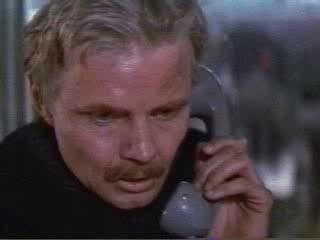
In The Odessa File the year is 1963 and the place is Hamburg, Germany.  An elderly Jewish man commits suicide leaving only a diary the eventually falls into the hands of a freelance reporter, Peter Miller (Voight).  This diary documents the unspeakable crimes of torture, acts of cruelty, and mass murders of thousands that were perpetuated by SS Captain Eduard Roschmann (Schell), the commandant of the notorious death camp at Riga, Latvia during the war.  Miller launches a personal manhunt to track down Roschmann and his investigation leads him to the heart of the secret organization known as ODESSA, formed by the SS themselves to protect and re-establish their members throughout the world with new identities.  On his hunt to track down Roschmann, Miller learns that the organization’s plans run even deeper and are more dangerous than anyone had imagined.

Coming on the heels of another film adaptation of a Frederick Forsyth novel, The Day of the Jackal, The Odessa File is a smart, sharp thriller that will reward those who like getting swept up in a big story. Director Robert Neame was a noted cinematographer before he slid over to the director’s chair and is probably best known for films like The Horse’s Mouth and The Poseidon Adventure.  Neame follows that action throughout the streets of Hamburg and Munich, making the city streets come alive as the character and vibrancy of the city plays a major role in the film. As a director Neame was adept at working in multiple genres and the script from Kenneth Ross and George Markstein keeps the story moving at a fairly deliberate yet intense pace, keeping the viewer engaged at every turn, which makes it a rewarding experience for the attentive viewer, even despite some questionable musical score cues throughout the film.

In the lead role, Jon Voight as Peter Miller, the reporter turned war criminal hunter, did a fine job as The Odessa File fell right in the middle of his peak creative period, coming only a couple of years before his Oscar win in Coming Home.  Voight kept his character’s true motivations in check until the final act of the film, making the motivation and reasoning for his quest all the more satisfying.  Maximilian Schell showed up in a small yet pivotal role and we also get an appearance from a young Derek Jacobi, but the film begins and ends with Voight as the strong, yet reluctant hero, forced into action by circumstance and happenstance.

New on Blu-Ray, the transfer of the film was excellent as the colors were vibrant and the film looked era-appropriate with excellent sound throughout.

While I have to admit that as a critic I do have a certain soft spot for spy thrillers from the 70’s, The Odessa File was a little different from the rest.  Most spy thrillers rely on the excitement of the chase, while this story had its real payoff at the emotional destination that it takes its characters to.  It’s a fantastic watch for anyone who appreciates high quality storytelling.

The Odessa File is available on DVD and Blu-Ray at video stores all across the city of Toronto and you can also watch it on demand via the Netflix streaming service.

Don’t forget to follow us on Facebook at Entertainment Maven.

INSIDE OUT 2012 (Toronto) – Boy Shorts 4 Program Review (Paolo Kagaoan)

INSIDE OUT 2012 (Toronto)

Boy Shorts 4 Program. This program included six short films:

33 Teeth

Directed by Evan Roberts

Cappuccino

Directed by Tamer Ruggli

Deep End

Directed by Bretten Hannam

Lament (Lamuria)

Directed by Nathan Cirino

Teens Like Phil

Directed by Dominic Haxton and David Rosler

Time Out

Directed by Rikhil Bahadur

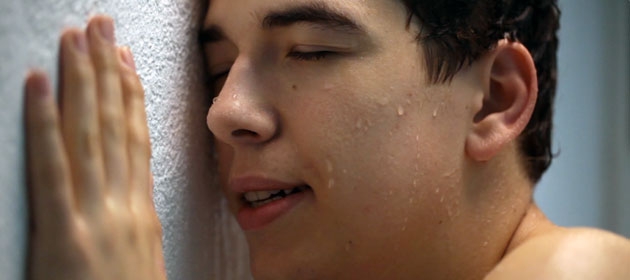
Boy Shorts 4 aims to be about discovery, of young men thinking about their love for other young men. Finding this out gives me ambivalence. Despite knowing that the screen is making me watch who are supposed to be my younger self I also feel like I’m watching young men think about and simulate sexual acts, which makes me slightly uncomfortable for obvious reasons. But as one short movie followed another, it was voyeurism that was the screening’s agenda, as they could have all fit within one heading – that young gay boys are surrounded by male jerks. And in bringing that message forth, they’re all of equal artistic merit.

Subheading one – my first boy crush is a jerk. Examples – Cappuccino, where young Jeremie thinks about hooking up with his darker, more sexually confident doppelganger. This fantasy slowly comes into a fruitful night, until the crush object kicks him out of his downtown apartment. Jeremie also has a voluptuous and oblivious mother who has to deal with her own sexual rejections. Teens Like Phil, where digital filmmaking clashes with avant-garde editing, beginning with a crowd of white-clad boys chasing the titular Phil. He is a gay private high school student, desiring his lover turned bully, who has his own familial sexual traumas.

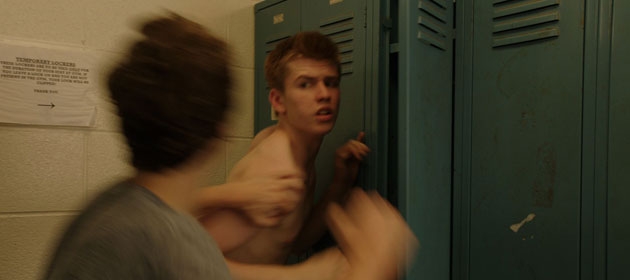
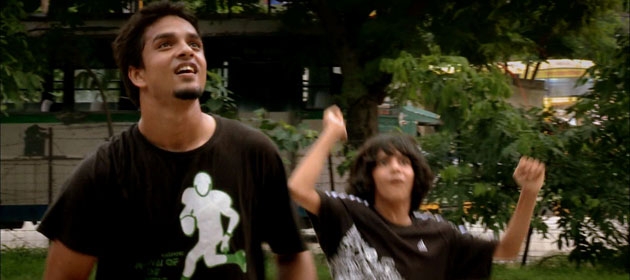
Subheading two – I found out that my older brother is gay and he, by default, ruins my life. Examples – Deep End, set in a local pool in Nova Scotia, and a middle school where a boy sees the word ‘fag’ on his locker because his brother is gay. Time Out, set in an International school populated by upwardly mobile Indian teens who speak in English and the girls are as outspoken as the boys, thus reminds me of home. One of the students finds his older brother, who is a star in the basketball team, in bed with his teammates. It’s the least hostile short.

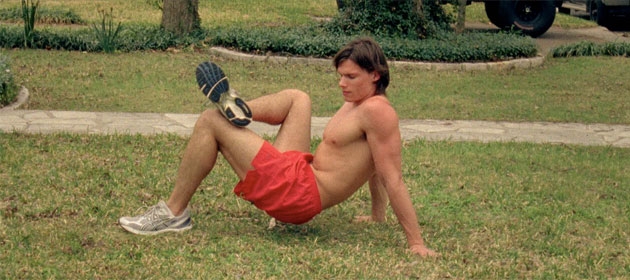
Subheading three – I have an unrequited love with an older man, but not too old. Examples. Lament, or Lamuria in Portuguese, is set in a mostly white private school in Brazil, where a boy falls in love with his poetry teacher. He sets an appointment with the teacher, only to find him in an argument with his girlfriend, throwing his phone violently on the floor. The latter act is unthinkable unless you’re a member of the one percent. 33 Teeth is where a jogger catches the eye of a teenage boy, who forsakes household chores to spy on the former. The jogger has a homophobic best friend. It’s the sweetest of the bittersweet, ending with the boy gushing but that’s also because there’s still the distance between the two of them.

Other elements that some of these movies have in common are vandalism, private schools, foreign countries, and overbearing mothers. There’s something cushion-y about these scenarios. It’s as if these diverse storytellers use class, race, and family to offset their protagonists’ dramatic moments, taking their stories’ pathos from tragedy and giving their characters actual solutions for them to be able to cherish the love that they once had.

Follow me on Twitter @paolocase

Like Entertainment Maven on Facebook