HOT DOCS 2012 (Toronto) – An Affair of the Heart (Kirk Haviland)

HOT DOCS 2012

Affair of the Heart

Starring Rick Springfield

Directed by Sylvia Caminer

Affair of the Heart is the story of Rick Springfield’s fans more than Rick himself. Sure we get the history and timeline rundown of events leading to this part in Rick’s life, but it’s the stories of the diehard fans that surround him that shape the story of Affair of the Heart.

As the film opens we get a montage-style history rundown on Rick’s career from 80’s heartthrob with General Hospital and his hit single Jessie’s Girl through to his decade long disappearance and recent resurgence. We find out that for Rick’s fans there are two “must see” events each year, a cruise that happens in November and a stretch of four consecutive nights of concerts in Milwaukee. It’s the Milwaukee concerts that act as the through line for the first part of the film, as we are introduced to some of the fans that will also be major focus of the film. We meet Sue and Joanne, two New Jersey housewives and lifelong fans who met at a concert and became instant best friends. We also meet the husbands who are constantly abandoned  for Rick. Laurie had multiple surgeries as a young girl,  went through a lot of pain and recovery, and managed to find solace with Rick’s music. Laurie shares a tear filled moment explaining her story to Rick and finally feels she can move forward when by chance she gets to repay Rick with a huge gesture of her own and the two become lifelong friends. Dustin first met Rick as a two year old brought on stage to sing with Rick. Through the years Dustin keeps in touch and appears many times with Rick onstage, including a performance as part of the film with Dustin on guitar. All things lead to the big Rick and Friends cruise and lots of good times and music aboard the ship.

The film delves briefly into Rick’s depression which lead to his leaving the public eye for a decade, but filmmaker Caminer decides to focus more on the fans of Rick and not pursue this storyline unfortunately. The fans used in the doc are really fun to watch, in particular Sue and Joanne and their long-suffering husbands, especially Sue’s husband Mike a former musician in his own right. Rick still proves he can bring the performance onstage with some well captured performances, especially one with a tornado looming in the background proves his devotion to his fans is massive.

Not the best doc I have seen this year, but it certainly is fun.

Til Next Time,

Movie Junkie TO

Make sure to keep up with all the goings on at Entertainment Maven by liking our Facebook page and having updates deliver right to your Facebook Feed. The only  way to stay on top of all of our articles, including more Hot Docs 2012 coverage.
Follow me on twitter @moviejunkieto

HOT DOCS 2012 (Toronto) – Bones Brigade: An Autobiography (Kirk Haviland)

HOT DOCS 2012 (Toronto)

Bones Brigade: An Autobiography

Starring Tony Hawk, Rodney Mullen, Lance Mountain, Steve Caballero, Tommy Guerrero, Mike McGill and Stacey Peralta

Directed by Stacey Peralta

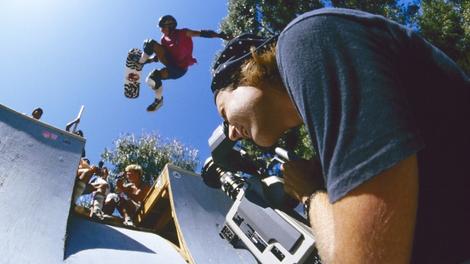
Skateboarding Pioneer and Former Z-Boy, Peralta, returns to his roots again to helm the follow-up to his fantastic documentary Dogtown and Z-Boys, Bones Brigade: An Autobiography. The Bones Brigade was a skate team put together by Peralta in the early 80’s, then young unknowns in the sport, and inspired by the way Skip Engblom put together the Zephyr team Peralta had been part of in the 70’s. The team put together by Peralta would become legendary and rule the decade of the 80’s and beyond. The Classic lineup included Tony Hawk, Steve Caballero, Rodney Mullen, Lance Mountain and Mike McGill, with Tommy Guerrero joining shortly after and many more members following throughout the years.

Bones starts with the Del Mar competition in ’82 and Hawk’s dominant performance in the pipe. We are introduced to the crew and Peralta explains his philosophy behind the team. Peralta and business partner George Powell would form Powell-Peralta skateboards in the late 70’s and wanted to develop a team to be the faces of the brand. Peralta wanted to discover and coach the kids, therefore they would have to be discovered not just signed from the crop of pro’s available.

Bone’s first recruit was Caballero, Cab for short, a feisty 15 year-old kid small in stature who could skate like no one’s business. Peralta would then add Tony Hawk, a gangly 13 year-old who lacked a fluid style but had trick after trick in the half pipe. Then came Mike McGill, a talented tactician on a skateboard and the inventor of the McTwist; Lance Mountain, a goofy kid with a love for skateboarding but no accolades or awards to his name; and later on, Rodney Mullen, the most technically skilled skateboarder on the street of all time, inventor of many tricks but the one that changed the entire skateboarding world forever was the street ollie. Lastly, Peralta added Tommy Guerrero, another highly skilled street rider. The Doc chooses to focus on these six , mainly on Hawk, Mullen and Mountain, while also covering the other 3 more than adequately.

Mountain is the personality and the heart of the group, a decent skater who became famous due to his appearance in the early Bones Brigade Video Show, a video cassette that sold more than 30,000 copies. Mountain’s personality makes him a stand out, yet throughout the film Lance continues to thank Peralta for taking him on to the team, something he feels he did not deserve. We hear Mullen’s story of his father and his constant struggle against him to be allowed not just to compete but skate in general. Mullen dominates the competitions, going undefeated for years, but he burns out and leaves skating for a hiatus, which we also find out was the work of his dad. Mullen fights back and still skates to this day. Lance may have been the heart of the team but Mullen is the heart of this film. Tony Hawk’s legendary battles against rival Team Alva’s Christian Hosoi are documented and the film talks about how Hawk was hated by the hardcore skate crowd and actually spit on after winning. This leads to a sabbatical for Hawk in which Mullen of all people helps him work through. The six become mega stars after what Peralta now calls the amateurish Search for Animal Chin video. This goofy little film led to more TV and movie offers for the Bones crew that would land them everywhere. Eventually the parts became bigger than the whole as the kids had grown up and many moved on to form their own companies, causing friction between Peralta and George Powell who split as well. By the beginning of the 90’s the Bones Brigade was no more, but they left behind a decade of dominance.

Bones Brigade ditches the narration style of Dogtown as this is more a story of the people not just the history as Dogtown was. Everyone comes off well here but it’s Mountain and Mullen who steal the show, I would watch a feature doc on either one of these guys right now.

A suitable and solid follow up to Dogtown, Stacey Peralta has crafted himself another winner here. A Must See for Dogtown fans, yet still highly recommended for those who haven’t.

Til Next Time,

Movie Junkie TO

Make sure to keep up with all the goings on at Entertainment Maven by liking our Facebook page and having updates deliver right to your Facebook Feed. The only  way to stay on top of all of our articles, including more Hot Docs 2012 coverage.

Follow me on twitter @moviejunkieto 

HOT DOCS 2012 (Toronto) – We are Legion: The Story of the Hacktivists (Paolo Kagaoan)

HOT DOCS 2012 (Toronto)

We are Legion: The Story of the Hacktivists

Directed by Brian Knappenberger

What interests me the most in We Are Legion: The Story of the Hacktivists, and I’m not sure if I’m offended by it, is their use of the word ‘rape’. The word is used from feminism to ecofeminism, but hacktivists incorporate the word, like raping the bandwidth of a website using free downloadable programs. One can rape a person or even a country. But using the term for corporations? I can’t associate one idea with the other. But these hacktivists make it possible, the Internet becoming an equalizer making an individual as strong as whole religions or countries.

We are Legion takes us to the past decade when Christopher Poole founded 4chan, a website that ends up being the ‘butthole of the internet’. Saying ‘rape’ and ‘asshole’ comes from 4chan’s first generation ethos of going into any other website and typing or displaying the most offensive words or images for lulz.

The movie and 4chan’s turning points occur when they encounter a racist radio personality Hal Turner, whose life they deservedly ruined. Funnily enough, they receive every opportunity to do the same by inadvertently gaining one enemy after another. First is the Church of Scientology, who sent out letters of cease and desist after it posted a private recruitment video featuring Tom Cruise in 4chan and many other websites. Scientology’s antagonism eventually makes many 4cham members found and join a group called Anonymous, disturbing corporate peace both online and in real life.

Their list of targets grows into media companies, credit card companies and governments who approve of censorship and limited internet rights. Their biggest achievement then is their contribution to the Arab Spring, borne out of giving Tunisians internet access after their government blocked online use. The thing is, whatever good deeds they do are treated with suspicion so they have an uphill climb, since there are many factions of Anonymous doing evil as much as there are members doing good deeds.

The delightful thing about We Are Legion is that it starts the discourse about activism, having its fragmented state since the globalization movement. The movie highlights the good over the bad within this maligned group, putting importance towards Anonymous’ contributions over those of the mainstream media who are either tardy or ignored. But aside from this intellectual stimulation, it’s also a story of a generation of sixteen year-old geeks growing up. Featured ex-Anonymous members talk about realizing what they and their computers’ potentials can be, and how they can change the world. It’s also about their pride in their achievements despite religious and government intimidation.

I guess the only thing I can say is that the movie, having equal parts of talking heads, archive footage and animation, is visually conventional. It looks like a documentary, so what? This movie screen depicts many computer screens, which surprisingly bring a new flavour of cultural familiarity. It’s one of the most informative movies I’ve seen, teaching its audience that infiltrating and many other tactics can bring democracy back to our steeply stratified society. It also lives up to capturing the wide scope of people and events that it promises.

Like Entertainment Maven on Facebook

HOT DOCS 2012 (Toronto) – Only the Young Review (Paolo Kagaoan)

HOT DOCS 2012 (Toronto)

Only the Young

Directed by Elizabeth Mims and Jason Tippet

Tickets are still available for May 6, 4:30pm: CLICK HERE

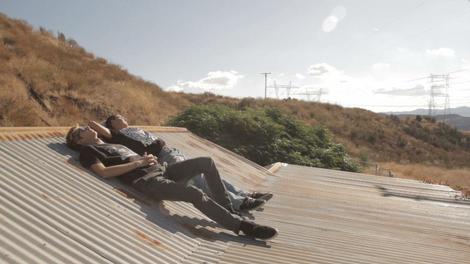
The filmmakers behind Only The Young made their movie just to document the journey of two teenage Californian boys, Garrison and Kevin, to a skateboarding competition. But eventually they found a new mission statement in portraying a version of adolescent life that closely relates to their experience that isn’t shown in fictional media. They want to show these children’s friendships and romantic relationships during their last year of so in high school.

Pfft.

There is little to no chance of convincing me that stories about adolescent life haven’t been exhausted already. Hormones and a taste of adventure! Being bored of a small town yet wanting to contribute to its stagnant gene pool anyway! Being uncertain about life and the future, yet hanging out in abandoned desert houses instead of getting part time jobs! Best friends having rifts because of who kissed who! A close-knit inner circle who doesn’t talk to people outside their race!

Only The Young is shot in clear digital cinema, capturing the warm glow hitting the sand in the desert mountains around these adolescents, the boys’ gaunt faces and minimal dialogue reminiscent of Beavis and Butthead, the girls and their ill-fitting jeans. It’s especially hilarious how there are sequences where the boys skate and do tricks on rooftops, the camera going slow-motion while an old song is playing to make the scene more thoughtful and bucolic than necessary. This makes Sofia Coppola’s lazy summer afternoon aesthetic look more masterful and elegant.

Those scenes, regular or slow motion, give the movie a casual tone and that’s mostly how these adolescents view life and each other. Casual treatment of a forty year-old guy who skates for Jesus influencing their impressionable minds. Casual name-dropping of Jesus and using Him as a password in such a way that no one can date this or that person unless they also love Jesus. Casual anti-atheism. Casual isolation of Garrison’s new girlfriend Kristen because she questions the Church’s patriarchy then calling her ‘not pretty,’ a ‘bad influence’ and a ‘shitty girlfriend’.

There are moments when I sympathize with the person hurling most of the insults towards Kristen – Skye. She talks about being a honky-tonk, being under threat of losing the house where she and her grandfather live. She’s the movie’s core and problematic soul without calling attention to herself, her scenes almost making me thank that I’m not watching some reality show with unnecessary heightened emotions. She’s baffled by her on-and-off boyfriend’s indifference or overt optimism towards her precarious situation. She and Kyle have connections in Tennessee, their families separately contemplating moving here, and she also has the option of moving in with Garrison. She talks about these choices in a straightforward manner, thinking about doing either if she has to.

The three friends discuss the possibility of missing each other without crying about their separations. Like these life choices they’re sure that their company, just like adolescence itself is fleeting. And at least, despite my problems with their lifestyle and prejudices, these subjects and the movie they’re in show fear of adulthood in a minimal, subtle matter.

Like Entertainment Maven on Facebook

HOT DOCS 2012 (Toronto) – Herman’s House Review (Paolo Kagaoan)

HOT DOC 2012 (Toronto)

Herman’s House

Directed by Angad Singh Bhalla

Tickets are still available for May 6, 9:30pm: CLICK HERE

Herman’s House is about a Black Panther named Herman Wallace imprisioned in Angola, Louisiana for killing a jail guard, although there is no concrete evidence pointing to his guilt. But it’s also equally about Jackie Summel, the woman who wants to build his ideal house for him. We see separate segments of her rabbit hole from being an abused child to local beauty queen to pro-choice activist to her current self as an activist/artist/nieghbourhood mother/debtor who is spreading word about Wallace’s unjust imprisonment as well as about solitary confinement, a practice she deems as draconian and cruel yet accepted by people around her.

By the way, solitary confinement isn’t just a one-off thing where a man is sent to a black box for a few days – Wallace is in his cell for the duration of his term. Summel’s first art installation is a physical manifestation of her therapeutic idea to let him, verbally and through letters, imagine his ideal house and forget his present living quarters. It also has a piece made of wooden materials showing his cell and thus the inhuman practice of putting people in cells that small. The director, Anghad Singh Bhalla, also interviews prison architects – what, people specialize in that? – who agree that spaces like Angola inhabit are archaic.

A scene in the movie lets Summel meet one of those people who thinks that solitary is fine, just like there are other scenes where she talks to people in the South about Wallace and getting the land for his house. One woman tells her that unlike her New York way of thinking, the realtor speaks for other Southerners and that she doesn’t care about living next to an ex-convict and that she has guns in her house to protect herself. It’s a bittersweet comic relief in a gloomy-toned doc, unlike a scene when a man who knew Wallace and is now a contractor working with Summel. He tells the director  that she’ll be perceived as a white woman who doesn’t belong near Angola and that she should leave the Panther struggle, a movement ambivalently received by the black people featured in the movie.

The doc weaves stories that seem too different and relates them to Wallace. One of the minor subjects is a white man imprisoned longer than he should have been, telling the camera that Wallace has given him back his compassion. His mother agrees, wondering how Wallace, changing her almost jaded son, can serve his society by being on the outside. Wallace confirms this positive word of mouth through recorded phone conversations between himself and Bhalla/Summel, an eloquent voice telling both of them to have a better outlook and to persevere. This audio is accompanied by animation of his early life and ideal house.

This movie shows that perseverance is an underrated virtue, as evinced by my initial and future reactions to it. At first I misunderstood Wallace and Summel’s struggle, that as Wallace admits, there are possibilities that both might be seen as taking advantage of each other, Wallace furthering his cause through her and she upping her profile as an artist through his struggle. It also seems like masochism on Summel’s part of putting herself in debt for a lost cause. But then I realized that it would have been bourgeois and callous of her to give up after her installation tour. This movie, therefore, shows activism in its purest form and should be seen in that respect.

Like Entertainment Maven on Facebook