TIFF 2012 – The Impossible Review (Dustin SanVido)

Photo from http://www.tiff.net

The Impossible (2012)

Starring Naomi Watts, Tom Holland, Samuel Joslin, Oaklee Pendergast, and Ewan McGregor

Directed by J. A. Bayona

MINOR SPOILERS

After beginning his career with the fantastic ghost story tale The Orphanage, Juan Antonio Bayona has chosen to take on a true life story of a family caught in the deadly Thailand Tsunami of 2004. This was a film I walked into with very low expectations as it lacked any publicity, the family had been whitewashed in the scripting phase, and I had known that the story would take certain liberties with the facts, as is the case with any film that features the caption “based on a true story”. And although the finished product is emotionally manipulating and filled with moments that I know never happened, as a film and piece of entertainment I was completely on board and engaged. The Impossible in short, may just be the most devastating and realistic portrayal of a natural disaster ever brought to life on film.

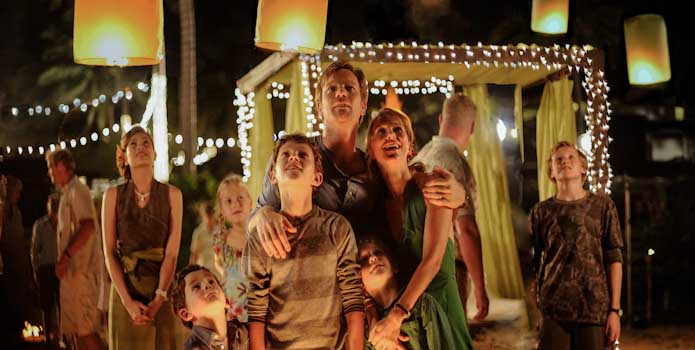
At the onset we are introduced to the family in flight as they make their way to spend their Christmas vacation at a newly opened resort in Thailand: Henry (Ewan McGregor), Maria (Naomi Watts), Lucas (Tom Holland), Simon (Oaklee Pandergast) and Thomas (Samuel Joslin). Within 15 minutes of screen time, our protagonists have been perfectly introduced through Christmas festivities and a wonderful sequence involving the release of candled lanterns that although I feel was un-needed and done better in movies like The Beach, was welcomed none the less. A day or so later, the family is enjoying themselves by the pool when a thunderous roar sounds and the Tsunami hits.

Photo from http://www.tiff.net

I am a shameless fan of disaster porn and the work of the king himself, Roland Emmerich. No one knows how to destroy our world like Emmerich, but he needs to sit and take notice because Bayona has perfectly and masterfully captured the terrifying, lucid and sudden impact of a disaster like this, and unsurprisingly this is the unquestioned standout of the film. Everything that happens in The Impossible hinges on this moment of the film and it is nailed to absolute perfection. It’s thrilling, scary and you’re thrown into this moment with zero notice, much like the experience of the real life counterparts of the actors. There is no over-dramatizing in this sequence and I believe this is a new benchmark in disaster films. It is also the moment in the film where the focus shifts solely to Maria and the eldest son Lucas for a good chunk of the film.

Recognizing where the heart of the film rested, Bayona wisely chose to spend most of the aftermath in the presence of what are also the two best performances of the film as well. After barely escaping the onslaught of waves with their lives, Maria and Lucas are in a state of shock, ignoring the grisly injuries both suffered during the tsunami. Their first instinct is to get to higher ground and address their wounds, some of which could prove to be fatal. Along the way their humanity is questioned more than once, and after overcoming seemingly insurmountable odds with a bit of luck, the two find their way into the care of one of the local hospitals, which are now rampant and overcrowded with the injured and the dead. It’s here where the remainder of their involvement in the narrative will take place while we learn the fate of the rest of the family.

Photo from http://www.tiff.net

We then explore the aftermath of the tsunami through the perspective of Henry and the two younger sons, which isn’t as strong of a story, but is still efficient and effective. Henry’s main concern is to ensure the safety of his youngest, then continue to try and locate the remaining members of the family. The rest of the film is fairly straight-forward and doesn’t try to be anything else but a film about survival and the triumph of the human spirit in the face of great uncertainty.

Unlike many films in this genre, The Impossible triumphs in the smaller moments where others falter, and I believe that strength lies in the script. Sergio Sanchez has written a taught, lean and efficient script that is smart enough to choose its moments to halt the narrative and reflect on the situation through a handful of effective dramatic scenes that allow the actors to really shine amongst the thousands of extras. Sanchez also used a theme of circles and repetition in his story as a metaphor for the pain and guilt of the survivors that is likely still with the family today. The choice to make the family’s ethnicity American is certainly going to be scrutinized, but for a Spanish production, I suppose the only way a producer gets enough money to make a film of this scope is by taking such liberties.

Photo from http://www.tiff.net

Although most of the dramatic events surely didn’t happen this way, the moments feel genuine, and the actors really bring their A-game to create the tension, grief, and sadness required to suspend our disbelief in those smaller moments. As I said earlier, all the actors, from the leads to the extras, really stepped up to bat and knocked their performances out of the park. However, the real acting standout in The Impossible is the performance of Tom Holland as the eldest son Lucas. His portrayal is genuine, and at no moment does it feel melodramatic and forced. The majority of his scenes are separate from the lead actors and for the most part it feels like The Impossible is Holland’s film.

Due to its choices in portraying the event to a greater dramatic effect, this isn’t a film that will garner a lot of awards attention on the acting, writing, and directing side of things, but I feel there are many nominations coming for everything in the technical department from the sound and special effects to the editing and cinematography to the production design and score. The Impossible was a welcome surprise and an early favorite of the festival for me and by the sounds of things, most of the others in the audience, thanks to its scale, acting, and sense of realism. Fall season has just begun so it’s IMPOSSIBLE to tell if it touches my top ten of the year but I’m excited to find out.

Like Entertainment Maven on Facebook

Resident Evil: Retribution Review (Kirk Haviland)

Resident Evil: Retribution (2012)

Starring – Milla Jovovich, Sienna Guillory, Michelle Rodriguez, Aryana Engineer, Boris Kodjoe, BingBing Li

Written and Directed by Paul W.S. Anderson

Coming back to the Cineplex, from Allliance films, this weekend for the 4th follow up to 2002’s Resident Evil, Resident Evil: Retribution goes back to its roots. Writer/Director Paul W.S. Anderson brings back characters from all of the previous films, including Michelle Rodriguiez’s Rain from the first film, and this time around takes us to the iconic Racoon City. But will this Resident Evil be the fun joyride of the first or continue the lacklustre trend of its follow ups?

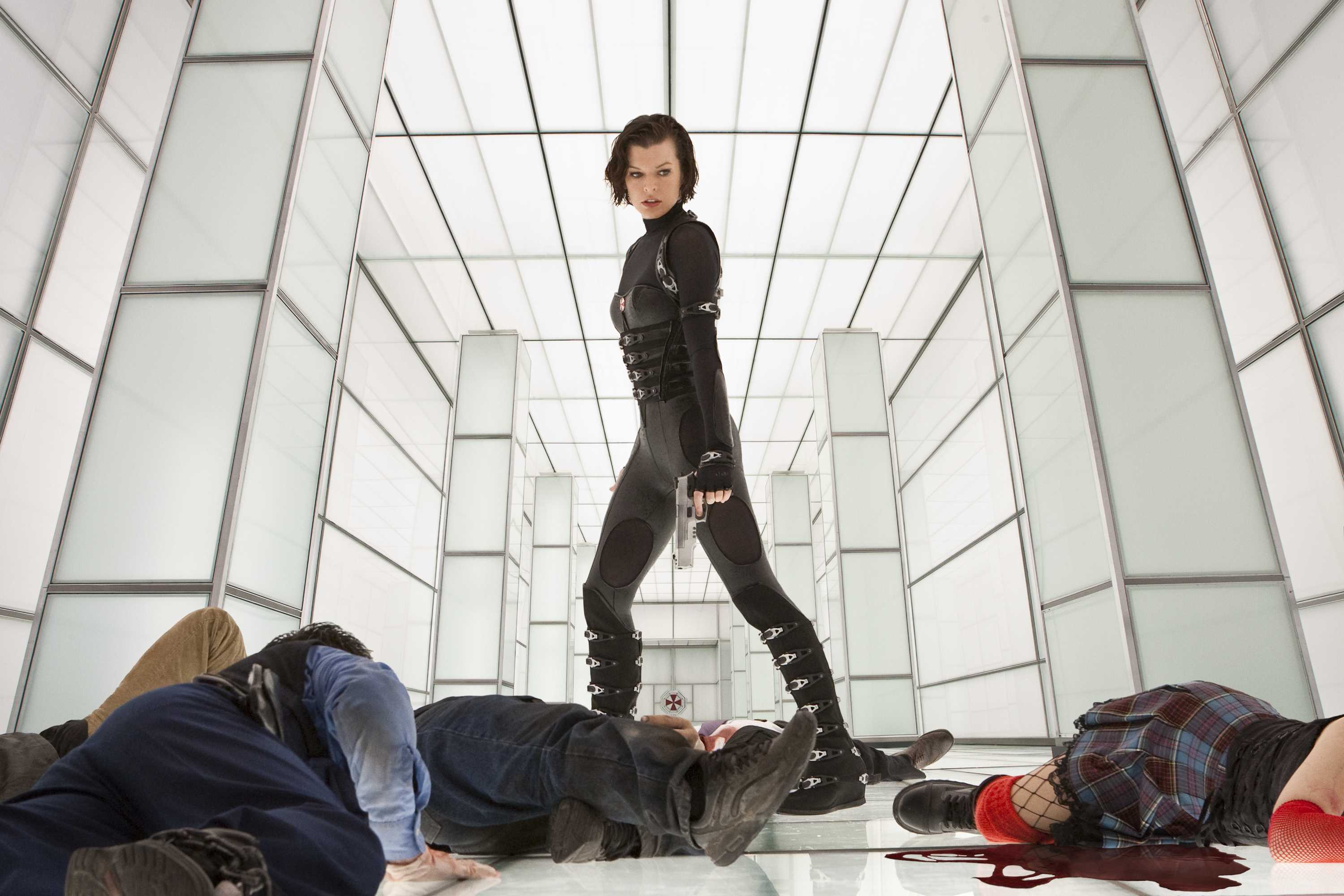
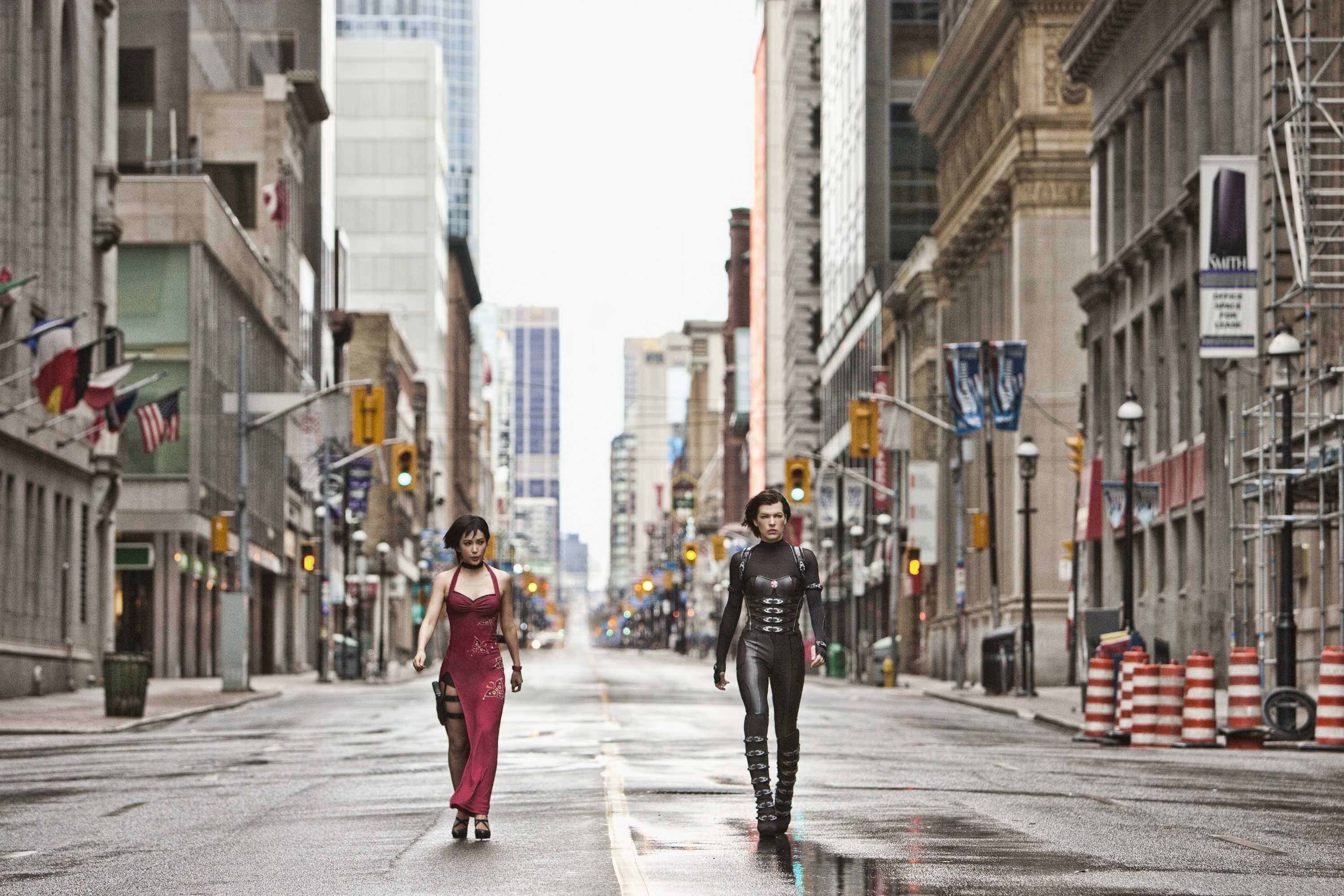
Retribution starts directly from the end of Resident Evil: Afterlife with Alice (Jovovich) managing to escape the carnage of the incoming onslaught at the end of Afterlife, only to end up in The Umbrella Corporation’s custody, barely alive and breathing. The Umbrella Corporation’s deadly T-virus has continued to ravage the Earth, transforming the global population into legions of the flesh eating undead. Alice awakens in the heart of Umbrella’s most clandestine operations facility and promptly escapes her containment cell with the help of Ada Wong (Li) and another mysterious new ally. Ada and Alice must fight their way through the Umbrella complex, with foes new and old blocking the way, to meet up with the escape team waiting to break them out that includes fellow Afterlife survivor Luther West (Kodjoe). The complex is a series of testing scenario stations inhabited with the many clones of Alice and Rain (Rodriguez) among others. Leading the charge against Alice is Jill Valentine (Guillory), Alice’s former ally who has now fallen under the influence of the Red Queen. The insanity continues as Alice and crew fight of the hordes of the undead in 3D.

Photo courtesy of Alliance Films

Never one to be afraid to go completely over the top in action and effects, Director Anderson does not disappoint his fans here as the insane opening sequence is first shown in slow motion reverse and then replayed back in real time. The sheer amount of violence in the first 15 minutes is quite impressive. Retribution in many ways is a remake of the first Resident Evil as it takes place almost entirely in an underground Umbrella facility and Anderson uses similar camera techniques and schematic representations to jump between areas in the facility much like he did in the first. This time Alice is saddled with one of her clones (daughters) Becky (Engineer) in a homage/rip-off of the Newt/Ripley story from Aliens. Feeling overly obligated to the girl, Jovovich’s Alice at one point goes to extreme measures to protect her, another scene extremely reminiscent to the aforementioned James Cameron masterpiece.

Photo courtesy of Alliance Films

Sadly the entire film feels too much like a retread. Jovovich is obviously comfortable in this role, having done it four times before, but the script lets her down on this one. It is fun to see Rodriguez in this world again and her character in the script may be the most fun outside of the underutilized Kevin Durand, who plays the new character Barry Burton. Retribution does little to expand on the world the previous films have built, in fact it seems to revel in the fact that they are staying in familiar territory. And based on the blatant open ended conclusion of the film, the only reason Retribution is being presented to us may be to set up the next film which apparently will be the final blowout.

Photo courtesy of Alliance Films

Feeling very much like a case of déjà vu, in 3D no less, Resident Evil: Retribution does little to expand on its predecessors. The bombastic style that has permeated the series is here by the bucket loads, so defenders of the series will probably enjoy it. That said it does not carry enough for me, even with Rodriguez and Durand, to give it any more than the slightest of recommends.

Till Next Time,

Movie Junkie TO

Make sure to keep up with what’s going on at Entertainment Maven by liking our Facebook page and having updates delivered right to your Facebook News Feed. It’s the only way to stay on top of all of our articles with the newest blockbusters and all the upcoming films, festivals and film related events in Toronto.

Follow me directly on twitter @moviejunkieto and by liking my Facebook page at Movie Junkie TO

Email me at moviejunkieto@gmail.com

TIFF 2012: Thanks for Sharing and Everyday Review (Paolo Kagaoan)

Photo from http://www.tiff.net

Thanks for Sharing (2012)

Directed by Stuart Blumberg

Starring Mark Ruffalo, Gwyneth Paltrow, Josh Gad, Alecia ‘Pink’ Moore, Carol Kane, Tim Robbins, Joely Richardson and Patrick Fugit

Thanks for Sharing’s opening sequence has a shot of Mark Ruffalo praying, and these shots are digital, crisp and clean. This kind of visual cleanliness is ironic because the city it depicts, New York City, as well as the characters in it are dirr-ty! Ruffalo walks the streets of Manhattan full of lingerie ads. 2012 lingerie ads, if you’re getting my implications. It’s either the movie shows the dated aspects in writer-director Stuart Blumberg’s concept of overwhelmed sexual stimuli or Ruffalo’s character is just into barely legal anorexics. There’s lots of proof within the movie to back up both readings of it.

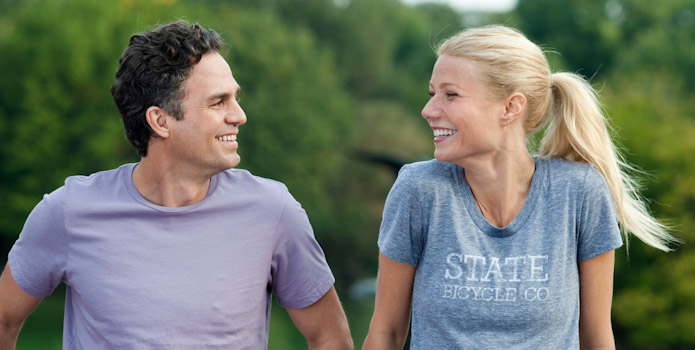
Ruffalo’s Adam, named after the original, primordial man, is in a Sex Addicts Anonymous 12 step program. There’s Mike (Tim Robbins), the papa bear of the group. Neil (Josh Gad), a doctor, is the kind of guy who humps people on the subways, fakes his sobriety day count and videotapes up his boss’s skirt. Peggy A. Schnizter costumed this movie and is apparently terrible at it. Anyway, the fourth member of the group is Dede (Alecia ‘Pink’ Moore), a foul-mouthed perfectly cast manic pixie dream girl who becomes Neil’s platonic BFF. These characters have love interests (Gwyneth Paltrow, who shares great chemistry with Ruffalo), wives (Joely Richardson), sons (Patrick Fugit, who is finally a man) and mothers (Carol Kane) who also deal with the main characters’ addictions as well as their own issues

The movie raises thoughts about sex addiction, proving sex addiction’s veracity as a disease and on a case to case basis and incorporating our own personal experiences to the disease. It’s mostly humourous, although there’s a shot where the gag takes place in the background and not the foreground. The last half hour would have been your typical rom-com conflict driven dénouement, but Mike’s wife’s comment, triggering most of the characters to go out of control, is jarringly cruel and refreshingly disturbing. It’s that one thing thrown into the mix that makes this movie less than conventional.

Photo from http://www.tiff.net

EVERYDAY (2012)

Directed by Michael Winterbottom

Starring Shirley Henderson, John Simm, Shaun Kirk, Katrina Kirk, Stephanie Kirk, Robert Kirk

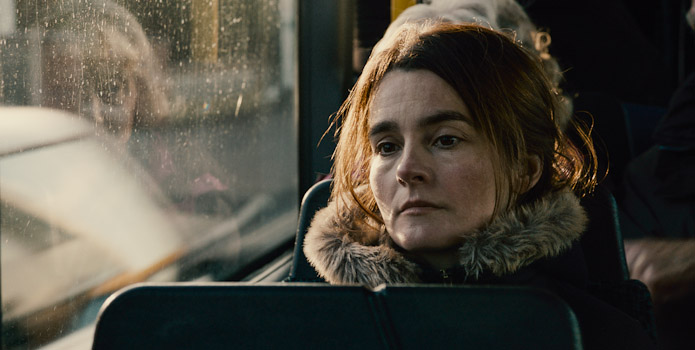
Michael Nyman scores this new Michael Winterbottom movie about a working class woman named Karen (Shirley Henderson). It’s a beautiful score that would be successful with or without the movie for which it is composed. The title, EVERYDAY, implies what we’re going to see for the next ninety minutes or so. It portrays five years of her and her kids preparing for the day, taking lots of public transportation – do cabs count – to school or her two jobs as well as to her husband (John Simm), who is incarcerated for most of the movie’s running time.

Winterbottom has filmed his actors for the same five years of Karen’s husband’s prison time. It’s a more realistic depiction of change, an experiment as to whether familial relationships can withstand a half decade of distance. He also doesn’t rely on aging make-up or wigs, and fortunately Henderson isn’t given the same cartoony roles that she has been reduced to in the past. Their kids have their naughty moments that almost make us worry. Despite that, Winterbottom thankfully doesn’t exclusively prove whether they turn up as bad kids or good ones. But the characters’ physical constancy reflects their interior static nature, making their lives almost mundane. Again, why watch a movie where nothing really happens? And if Karen is decidedly naturalistic and bare, so is her husband depicted unclearly. Simm makes his character good of a husband and father without exploring why he ended up in jail or excusing his behaviour. If anything, the child actors carry this movie, their young unsculpted faces and voices surprisingly capable of engendering the yearning for the father they barely see. This is especially true with Shaun (Shaun Kirk) draws out the way he tells his dad that he misses the latter, more haunting than Henderson, as great as she is here.

Follow me on twitter @paolocase

Like Entertainment Maven on Facebook

TIFF 2012 – The Bay Review (Matt Hodgson)

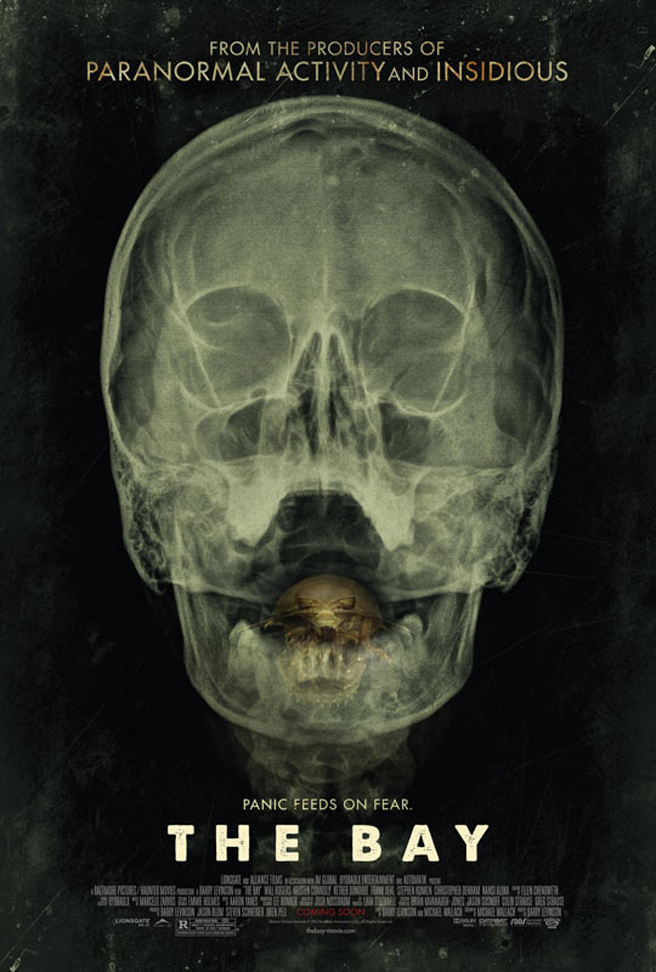
The Bay (2012)

Starring Will Rogers, Kristen Connolly, Kether Donohue, Frank Deal, Stephen Kunken, Christopher Denham, and Nansi Aluka

Directed by Barry Levinson

The seventh night of Midnight Madness (MM), the Toronto International Film Festival’s midnight programme, featured quite possibly the most decorated and experienced director to ever grace the midnight stage: Barry Levinson. Levinson is responsible for Rain Man, Wag the Dog, Sleepers, and Good Morning, Vietnam. It was very surprising to hear that Levinson was in Toronto with a horror movie, especially because he had never made one before and he must be about 70 years old by now, but given his experience I suppose the man has the ability to direct anything he wants to. I tried to have an open mind as the lights went down and I prepared myself for the eco-thriller mockumentary titled The Bay.

The Bay is the story of Claridge, a small seaside town in America that would probably be uninteresting to almost anyone, except for the recently retired or vacationers looking for unparalleled seaside solitude. Aside from the annual crab festival, complete with a crab eating contest and even the crowning of a crustacean beauty queen, there doesn’t seem to be a lot going on in Claridge. However, that changes after two marine biologists make a shocking discovery: the bay is becoming overrun with a small parasites called isopods. Unfortunately for the inhabitants of Claridge, the isopods appear to be growing at an alarming rate and even have a certain way of getting out of their watery environment which could be considered detrimental to human health.

Photo from http://www.tiff.net

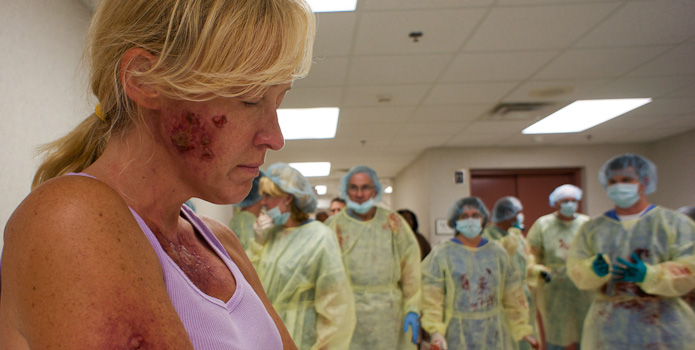
Levinson uses an interesting technique to tell the story of The Bay. The movie is very much a found footage flick, but instead of following one camera around for the entire run-time, Levinson opts to use multiple sources to keep the feel of the film fresh. We get a variety of perspectives: a camera man’s POV, video diaries, Skype calls, and security camera footage. This technique does all it can to keep the movie interesting, however the actual events of The Bay do not provide the same variety. We spend a lot of time looking at rashes in hospitals and listening to people in anguish before they die. These scenes are certainly effective, but only up to a point. Levinson really needed to kick the horror into the next gear to truly frighten the audience, but the story ends before that happens. We also get a few really good jump scares, but The Bay ultimately fails to create an atmosphere of panic, desperation and dread.

The performances do little to help the movie feel like reality. Many of the performances feel artificial, particularly Donohue’s reporter whose words do not match her facial expressions during her retelling of the horrible events that took place in Claridge.

Photo from http://www.tiff.net

However, The Bay was not simply intended to be a scary night out at the movies. Fueled by unabashed political motivation, The Bay is not an entirely fictional story. Levinson told the MM audience that what we were about to witness was 85% true. An odd number, but given how close it was to 100%, The Bay became a very interesting story indeed. Throughout the narrative many authority and government figures, including the mayor of Claridge, seem to make bad decision after bad decision and put the inhabitants of Claridge in danger. I have not done my homework yet to see which parts of The Bay were real and which were fictional, but if Levinson’s estimate of 85% is even close to true, The Bay becomes a damning tale of government incompetence. Unfortunately, if you remove the ‘true story’ angle of The Bay it remains a mildly scary horror film at best.

Photo from http://www.tiff.net

The Bay may tell an important true story, but fails as a piece of entertainment. It is completely out of touch with what scares a young audience these days, the same audience that has historically brought in the bucks for horror movies. Midnight Madness seems to be quite short on edgy movies this year, however we still have three to go: Come Out and Play, The ABCs of Death, and John Dies at the End. I’m hoping that these three movies bring the in-your-face, frightening, and visceral experiences that have made the midnight program so popular for so many festival attendees.

Like Entertainment Maven on Facebook

Burning the Midnight Oil with the Creators of Midnight Son (Kirk Haviland)

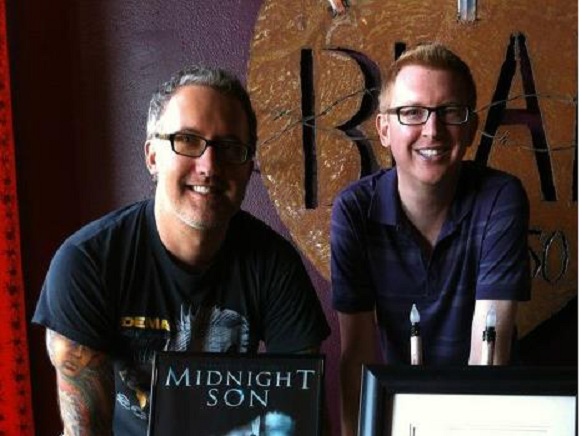
Kirk here, aka Movie Junkie TO. I recently had the chance to sit down with some of the guys responsible, Director Scott Leberecht and Producer Matt Compton, for the unique and daring indie drama/horror Midnight Son and ask some questions about the film. The DVD Review is available at the above link, but for now let’s get on with the interview.

Movie Junkie (MJ) – It’s great to able talk to you again Scott and Matt, it’s been a while since Toronto After Dark last year. Congrats on the DVD release.

Scott Leberecht (SL) – Thanks Kirk, I had a great time partying with you at TAD.  If you don’t remember anything, it’s okay, I only remember the mornings. Been a long ride to finally get to this point!  Seeing Midnight Son being made available to so many people all around the world is very rewarding.

Matt Compton (MC) – Thanks very much. It’s a nice feeling to know that after such a long road, people can finally watch the film.

MJ – Scott, Midnight Son was your feature film debut after directing many short films, one of which I’ll ask about after, and stints doing effects for films like Inside Man, Sleepy Hollow and Spawn. What made you decide to make the jump to your first feature?

SL – I had the unique experience of being able to work one-on-one with several major film directors of the 90s, and as a result, I got an itch to direct my own films. I think it came out of my frustration with the fact that I was being scolded by my peers for expecting a good story or compelling characters out of summer effects films.  I realized quickly that audiences were getting used to movies with no nutritional value.  Today, I compare it to the recent revolution in the food industry.  At some point, people started doing research and found out that these big fat food companies could make better food, but they just didn’t care (because everyone had gotten used to eating shit).  I hope Americans start reading books on how to write good stories and the same thing happens to the movie industry.   Maybe then we might have original screenplays being financed, instead of every studio movie being a remake, sequel, or adaptation.

MJ – Matt, how did you know Scott was ready for his first feature and how did you come to be involved?

MC – My story as a Producer on the film is definitely a unique one.  I actually wasn’t involved at the time the film was shot, I got involved about a year later.  The film was shot it in the summer of 2007, but at the time, Scott only had enough money to get that far.  So once shooting was over, he wasn’t able to move forward with post-production.  It turned out that at the time, a good friend of his named David Hughes was doing some sound work on a film I was producing, entitled SEVENTH MOON.  David mentioned MIDNIGHT SON to the film’s director, Ed Sanchez, and told him that Scott was looking to raise some money and finish the film (Ed was also co-director of THE BLAIR WITCH PROJECT.)  After Ed read the script, he sent it to me and asked if I would be interested coming on board as the Producer, to do the “heavy lifting” that would be getting the film across the finish line.

So, I definitely had an advantage that Producers don’t typically have.  I didn’t just have to go off of the script, but I was actually able to look at some of the footage before I jumped in.  The footage looked really good, and I definitely liked the script, so it was an easy decision for me to get involved at that point.

MJ – That’s a big advantage indeed. The film looks like a multi-million dollar production as the setting and set design really standout. It also makes a beautiful transfer to DVD, how did you manage to make such a film on an independent film budget? And how much of that came into play in the post production after Matt came aboard?

SL – It was really the work of our brilliant cinematographer, Lyn Moncrief.  He is the type of photographer that could make museum quality art with a disposable camera.  The truth about photography, I think, is that it is all about framing.  Even crappy lighting can look beautiful if the composition is extraordinary.  The focus can even be soft.  But if the framing is unbalanced or the camera position evokes a feeling that is incongruous with the story beat, no amount of pretty lighting or high definition capturing will help.  We were able to get a high quality image because we had real talent behind the camera, not money.

MC – In post-production, we were really blessed to have some very talented people work on the film, and that allowed us to raise the production value well beyond what our budget would have normally allowed.

First off, Scott’s friend David Hughes did our sound design and mix.  David works on very large studio films most of the time, and is incredibly good at his job.  He cared about the project so much, he took four weeks off working on studio films and did MIDNIGHT SON, taking quite a pay cut to do it.  Scott was able to spend a week with him in his home studio in Oregon for the final mix, which was really great.

For the music, we again had some luck on our side.  My friend Kays Alatrakchi is a very talented composer, and had heard about the film from a mutual friend.  At the time, there was another composer on-board, but he turned out to be unable to finish the film.  When I found that out, I reached out to Kays and showed it to him.  Fortunately for us, he really liked it, and agreed to do the music for the very small amount of money we were able to pay him.  I’ve been told by several people after festival screenings how great they thought the music was.  I couldn’t agree more.

For color grading, my friend Dan Myrick (the other co-director of THE BLAIR WITCH PROJECT) was kind enough to let us do it at his facility, called Chroma Lounge.  He gave us an incredible deal, and brought in a colorist by the name of Narbeh Tatoussian who did a fantastic job.  Dan was also instrumental in helping us prepare the film for delivery (delivery is creating a bunch of video tape masters and other materials that must be turned over to a distributor before they will release the movie).

So, across the board, we were so incredibly lucky to be able to work with all these talented people in the post-production process.
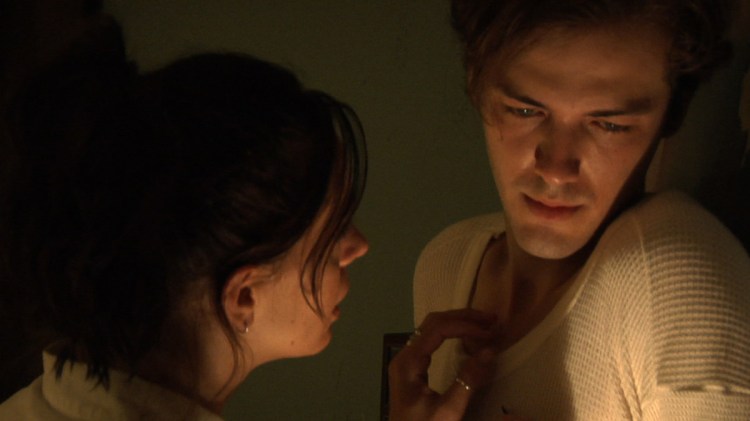
MJ – I also could not agree more with your comments about the music, it really is superbly done. Matt can you talk a bit about being a producer on a small indie film like Midnight Son and the intricacies involved with shooting on location?

MC – The film was shot in Los Angeles, and one thing about shooting there is that everyone is very film savvy.  So, when it comes to finding locations, pretty much everyone knows to ask for big money when they get approached by a movie or TV show.  So it’s always a big challenge whenever you’re shooting something with a small budget in L.A. to find locations that will agree to let you shoot there for a tiny amount of money.

On the permit side, luckily there is so much filming in L.A., the permit process is pretty easy and not terribly expensive.  The permit office is usually very easy to deal with, and when they issue a permit, they will cover up to 10 locations over a two week period, so you can cover a lot of shooting on one permit.  The price can add up if you’re shooting over a long period of time, but most small indies don’t have to worry about that!

What a lot of filmmakers do is only pull permits when they’re going to be shooting outside.  If you have a small crew and don’t have any trucks, you can shoot indoors and not draw any attention, so many just do those scenes with no permit.  It’s technically a “no-no”, but to save money, sometimes you have to do it.

MJ – Wow sounds like some of the productions I’ve seen in Toronto. Now Scott, what was the more challenging part for you in this process, directing or writing?

Writing was much more challenging.  I am a spatial artist first, temporal second.  My training in storytelling started around age 30, while creating visual imagery has been a natural compulsion since the moment I could hold a crayon.

MJ – Guys, Zak Kilberg came all the way up to Toronto for TAD last year to support the film, also one of your stars Maya Parish and fellow actor Kevin McCorkle are listed as Executive Producers on the film. Can you comment on what are obviously a tight knit and dedicated cast and crew?

SL – Everyone involved in Midnight Son was dedicated to this adventure.  We all believed in the power of the story and characters.  Everyone knew we had the talent to pull it off.  We were a family, and even at our worst moments, we sucked it up and did what we had to do.  The amazing thing about a cast and crew like this is that we all felt that Midnight Son was our shot at making something really fucking good.  So we went for it, with reckless abandon, fuelled by a primal lust for immortality through artistic achievement.  That sounds a bit dramatic, but when you think about it…

MC – Maya and Kevin were involved from the very beginning, and brought in money that was critical for the film to be able to move into production.  So, without them, the film might have never been made.  They both loved the script and decided to put their money where their mouth was, so to speak.  That’s a gutsy thing to do in indie film, and obviously we’re forever in their debt for doing it.

Overall, a great majority of the cast & crew have been so supportive throughout the process, even in those years where we were struggling to raise money to finish the film.  Even when they couldn’t help us directly, some of them tried to help by introducing us to others who might be able to.  I can take no credit for bringing those people on board; it was all Scott.  To me, it’s a testament to Scott’s script, as well as his drive to get the film made.  He really brought in a lot of tremendous people, and I think it shows on screen.  To be able to get what he did on the screen with such a small amount of money shows just how dedicated the cast & crew were to him and his vision.

MJ – That must have been a great experience. Finally I have one last question for each of you. Matt, in what I feel is one the best stories in indie film right now; you have recently launched a campaign to retrieve funds for your film from illegal downloaders. How did this come about and how successful has the campaign been?

MC – I wish I could say I planned it out months before and really thought it through.  But, the truth is, it was just something that I decided to do when I learned the film had shown up on the BitTorrent sites.  About 3 weeks before the DVD was released is when it happened, and at that point, the idea just popped into my mind that I should leave a message on The Pirate Bay, which is one of the most popular BitTorrent sites out there.  I just wanted to let people know that we were a small film struggling to make our money back, and if they wanted to help us out, they could donate to us or buy a DVD when it came out.

I wish I could say that we received a lot of donations, but sadly we didn’t.  It was a small amount, and certainly better than nothing, but it didn’t turn out to be earth-shattering by any measure.  I’m grateful to each and every person who donated, though, and I sent a thank you email to all of them.

MJ – A commendable idea though Matt, bravo. And Scott, in a non-related question, you are the only person I have ever heard of to attempt to put cult figure Lobo on screen with your short “The Lobo Paramilitary Christmas Special”. How did that come about and do you have ideas for a feature?

I will always be the biggest fanboy of the Main Man.  I saw my chance to make Paramilitary Christmas, so I went for it.  The experience was mind-numbing.  I have tons of ideas for the Lobo movie I would direct, but the problem is that he is an adult anti-hero.  To tell a proper Lobo tale, the film would have to be rated R or NC-17.  This would cut out such a huge demographic that there would be no way to recoup the financial investment a Lobo movie would require.  I think the only way Lobo will ever be made into a movie is if it is written to be rated PG-13, and sadly, that will NOT be a Lobo movie.  But I will go see it anyway.   I am weak.

Thanks again Guys, I really appreciate the time today. Could you each tell us a bit about what you have coming up next?

SL- Currently hard at work paying off my debt from film school.  I thought about making a sign– ‘WILL FILM-MAKE FOR MONEY’– and standing at an intersection in Hollywood, but then I realized I could probably get out of debt faster if I just filled out an application at a local grocery store.

MC – My pleasure.  As for what’s next, I’m actually taking a bit of break from producing, now that the film is out there.  It’s been such a long road, and there’s still a little more to be done in terms of trying to get the film released in other countries (Jinga Films is out foreign sales company and is working hard to make that happen.  Hopefully we’ll have some deals to announce soon).  One thing I’m just starting to think about is helping other filmmakers find distribution for their films.  The Film Collaborative, a non-profit group based in L.A., was invaluable in helping us secure our deals with FEARnet and Image Entertainment.  They tend to focus more on art-house and documentary films, and we’ve had discussions about me working with them to vet the more “commercial” films submitted to them or that may want to explore TFC’s services.  They’re a terrific organization run by some wonderful people, and I’m excited to see how things unfold with them in the next few weeks.

MJ- Sounds Great Matt, and I certainly hope that local IGA is hiring Scott! Thanks again and hope to see you guys back in TO again someday!

Like Entertainment Maven on Facebook

Follow me directly on twitter @moviejunkieto and by liking my Facebook page at Movie Junkie TO

Email me at moviejunkieto@gmail.com