Livid/Livide Review TIFF 2011 – From the makers of Inside/À l’intérieur

Image is not the property of Entertainment Maven

Last night was my second most anticipated screening of the festival, close behind the Midnight Madness closing night screening of Kill List. Livid is the second offering from the directors, Alexandre Bustillo and Julien Maury, makers of the Midnight Madness shocker and crowd-pleaser, Inside. I was not there four years ago for the screening of Inside, in fact I watched it a mere three months ago when I decided to get heavily back into horror cinema for the first time since high school, but let me tell you, Inside hits HARD. Mom, if you are reading this, perhaps you should skip to the next post, the synopsis for Inside is a little upsetting. Inside tells the story of pregnant woman’s fight for survival as she is terrorized on Christmas Eve by an insane woman wielding a pair of scissors and presumably, trying to take her unborn child. Inside, while shocking and terrifying, is also one of the most effectively balanced  tug-of-wars, between heroine and villain, of recent memory. In my opinion this places it miles away from the torture-porn label. Having created one of the best horror-thrillers of the past decade, it is no wonder that expectations for Livid were sky high.

Livid is of a decidedly different sub-genre than the tense and violent Inside. During the introduction of the film, Alexandre Bustillo described Livid as being inspired by old Hammer horror films and the maestro of Italian horror, Dario Argento. The film tells the story of Lucy, a young in-house caregiver trainee on her first day of the job with an experienced nurse who has been making these rounds for some time. The final house call is at a mansion in the woods that local children believe to be haunted. Inside, Lucy meets Mrs. Jessel, a woman who is over one hundred years old, breathes with the help of a respirator, and is in a completely vegetative state. The nurse tells Lucy that Mrs. Jessel’s wish to die in her home is being honoured because she is rich, and may even have a treasure of some sort hidden within the mansion. Lucy thinks nothing of it, but later, after being reminded of how desperately she and her father need money, she is convinced by her boyfriend Will to break into the mansion at night, and use the treasure to live more comfortable lives. Lucy, Will and his brother, Ben, set off to find the treasure, but a series of horrific events forces them to forget about the treasure, and strive to be free of the deadly clutches of Mrs. Jessel’s terrifying home. Bustillo was correct in describing Livid as a fusion of Hammer and Argento Horror, however the influence of the former was much more effective than the later.

Hammer horror films were best at creating haunting atmospheres and utilizing slow buildups. In Livid, the Hammer influenced aspect is executed masterfully and really sets the scene before the group of young explorers enter the mansion. The cinematography and set design are expert. Slow camera pans through the forest and mansion give the viewer the impression of lurking danger. Towering high angle shots give the impression that the characters as simply insects walking into a deadly predator’s trap. Also, the colour palette of lush greens, and soft blues of the forest and sea, contrast strikingly with the dark hues of the mansion and its interior. This juxtaposition can even be found in the irises of Lucy, as one of her eyes is an innocent blue and the other an engulfing dark brown. Livid is hands down the most visually impressive film I have seen so far at the festival. The influence of Hammer horror can be found in the score. Plenty of sorrowful string instruments let us know that there is a dark history to the mansion that Lucy is not aware of. The buildup to the horror is masterful, and is without a doubt Livid’s strongest quality, unfortunately when the true horror begins and the Argento influence takes over, the film takes a confusing and ineffective turn.

I am a huge fan of classic Argento films, and to me they often feel like bad dreams. The imagery is striking, the music is unsettling, and escape from the nightmare often seems impossible. Characters, their actions, and the story do not always make sense in Argento films, very much like in dreams. This method has made Argento films akin to paintings in an art gallery, you either like them or you don’t, their is no correct answer. Livid seems to borrow this dream like feel and subsequent lack of explanations, but it only sets on when the group enters the mansion, making the transition rather jarring. MINOR PLOT SPOILERS AHEAD. Red flood lighting (a la Suspiria) and discordant music (similar to Goblin) are used with some effectiveness, however the main Argento influence seems to be unexplained horror. For example, one of the treasure hunters is transported through a mirror into a laboratory fit for a mad scientist, and then attacked by a group of undead ballerinas. We never see these ballerinas again and never understand how the character had been transported through the mirror. This scene may work as art, but it is frustrating when placed after the ‘Hammer‘ style buildup. Unfortunately, it only manages to lessen the horror of the scene, as confusion takes a front seat.

The special effects and scares of the film are hit and miss. Some scenes near the end of the film feature amazingly grotesque imagery and force the viewer to wonder in awe as to how the directors got that on film. While others, a fingernail cutting through a stomach, seem artificial and a little rushed. Also, the scares in the film range from startling to ineffective. I can’t help but think that some startle scares should have been built up a little more and the startling sounds mixed a little louder.

I am a huge fan of Bustillo and Maury. Even if they never made another film, I would always think of them as masters of horror based on Inside alone. However, their second film, Livid, is ineffective as a whole, but probably worth a viewing at some point for the gorgeous imagery and haunting score alone. I feel partially responsible for my issues with Livid because of my unrealistically high expectations. This is only the directors’ second film! I have no doubt that Bustillo and Maury will be back with another winner in the future and until then, I remain a loyal fan.

You’re Next (TIFF 2011) Review – Masked Mayhem from Adam Wingard and Simon Barrett

Image is not the property of Entertainment Maven

Standing in line last night at Midnight Madness was a true test of willpower. I was waiting to see You’re Next, the new film from the guys that brought us A Horrible Way to Die, and I was scared out of my mind. I think at some level we are all afraid of the subjects of horror films; zombies, madmen, werewolves, etc., that’s why we watch, to be scared. However, we also have our idiosyncratic fears that will be shared by some, but the suffocating terror that seems to sink into our very bones will be not be experienced by the majority of viewers. My ‘special’ fear just happens to be masked assailants and motiveless killers. How quaint that You’re Next stars men in animal masks wielding crossbows, machetes and axes, who show up uninvited at a family reunion. It also didn’t help that an ingenious graffiti ad campaign had ‘masked killer’ art by eerily quiet parking lots and on lonely cement walls. Unfortunately for me, Ryerson theatre was not handing out complimentary blindfolds and ear plugs.

As I’ve alluded to, the film is about a well-off family getting together at an elegant country mansion for a family reunion. Scream queen Barbara Crampton (Re-animator and From Beyond) and Rob Moran play the upper class mother and father, while the four privileged adult children and their romantic partners include, AJ Bowen, Sharni Vinson, Ti West and Joe Swanberg, amongst others. Once everyone arrives at the country home, the members of the disharmonious family begin to squabble, bringing up arguments and feelings from the past for all of the guests to witness. Without warning things change from bad to worse, as the family find themselves under siege by crossbow bolts from outside and machete wielding manics from inside. They have been targeted by a group of killers and cannot understand why. Can the malfunctioning family band together and stop the killers, or will this secluded country mansion be their final resting place?

You’re Next has a lot going for it and is destined to become a commercial success, a cult classic, or both, it will probably come down to marketing. Every aspect of the film has many positive points. The cast is as stellar as it gets for horror movies, with the iconic Barbara Crampton, the always weird and entertaining AJ Bowen, Rob Moran, and directors Ti West (The House of the Devil) and Joe Swanberg (Nights and Weekends). However, the most exciting member of the cast is the talented and beautiful Sharni Vinson, who has cemented her place in the annals of horror cinema with the role of Erin. The combination of Barrett’s writing and Vinson’s portrayal of Erin has created what will be one of the most celebrated heroines in horror film. I’m not going to spoil why Erin is such a lovable character, you’ll just have to find out for yourself.

You’re Next starts off as an extremely tense film, as the audience knows to expect a home invasion, but doesn’t know when to expect it. Wingard and Barrett set up the horror quite nicely as we are given plenty of suspenseful moments and genuine scares before the true horror begins. Also, Barrett delivers an excellent script that is very much tongue-and-cheek and pokes fun at many of the cliched lines and situations that appear in generic horror films. At some point, You’re Next takes one step back from terror and at some level becomes a horror comedy. The transition works very well. That being said, there are still genuine scares throughout the entire film, it just gives the audience a break from watching the screen with the corner of their eyes, between open fingers.

The artistic palette of the film is really something to behold. I’m not sure if it was all intentional, but the colour of the furniture and wood in the mansion, the dark red hue of the blood and even the colour of Vinson’s hair look stunning together. Just look at the photo at the beginning of this review to see what I mean. The score complements the film nicely and even contains an electronic song that reminded me of Argento’s Tenebre (Goblin). Weird, but it works.

In the end, You’re Next is a taut, scary thriller that seamlessly transitions into a comedic, action packed bloodbath. I urge you too see You’re Next when you get a chance. Grab some friends and see it in a theatre, it will be a blast. Wingard and Barrett hinted that their next project would be more action oriented, but if it’s not horror-themed then I’ve got news for them.

They’re next!

Note: It’s nice to see such impeccable grammar from madmen writing on the walls with blood.

A Letter to Momo (Momo e no tegami) Review (TIFF 2011) – An enchanting journey to Shio Island

Image is not the property of Entertainment Maven

Adhering to the belief that there is something special about hand drawn animation that cannot be duplicated by computer animation, director Hiroyuki Okiura and Production I.G. have spent the past seven years making a magical masterpiece. A Letter to Momo rivals Studio Ghibli classics for pure imagination and charm, and is one of the most endearing, absorbing and comical adventures that I have ever seen.

The film follows a young girl named Momo and her mother, as they move from bustling Tokyo to the quaint island village of Shio. Early on it is made clear that the reason for their move is the death of Momo’s father in a research expedition at sea. Grasped in Momo’s hand is a blank piece of paper that she found in her Father’s desk. At least it is almost blank, save for two words, ‘Dear Momo’. Momo is having difficulty proceeding with life, without knowing what her father’s final communication would have been. However, a series of supernatural events on Shio island force Momo to engage life again and attempt to come to terms with the death of her father.

Hiroyuki Okiura wrote and directed A Letter to Momo, and in my opinion should write a book or teach a class on how to bring animated characters and worlds to life, if he hasn’t already. Okiura started his career working on Akira, and has been involved with major projects ever since (for example, Ghost in the shell, Innocence: Ghost in the shell and Paprika). His directorial debut was Jin-Roh: The Wolf Brigade. A constant theme in Okiura’s work has been violence and mature themes, however, he felt it was time to create something that would be enjoyable to children and adults alike. A Letter to Momo is the perfect compromise between these two different audiences, as the comedy and fantasy elements appeal to both ages, while the central characters have layers of complexity and emotions, to a degree that most live action characters/actors fail to achieve.

The animation is top of the line. The fluidity and imagination of several action sequences would suggest that they must have taken months or years to perfect, while the panoramic views of forested Shio island are absolutely breathtaking. One of the most amazing aspects of the animation are the facial expressions of Momo, as they are almost unbelievably real. I can’t remember the last time that non-verbal language has been communicated so clearly in an animated film. Finally, the wonderfully varied score is a pleasure to listen to and greatly complements the images onscreen.

While watching A Letter to Momo I felt like I personally knew the characters and cared deeply about their fate. The magical and touching story of A Letter to Momo is something that no film fan should miss. Unfortunately, it may be a while before North American audiences get another chance to see it.

I have no doubt that it will be worth the wait.

god bless america (TIFF 2011) Review

Image is not the property of Entertainment Maven

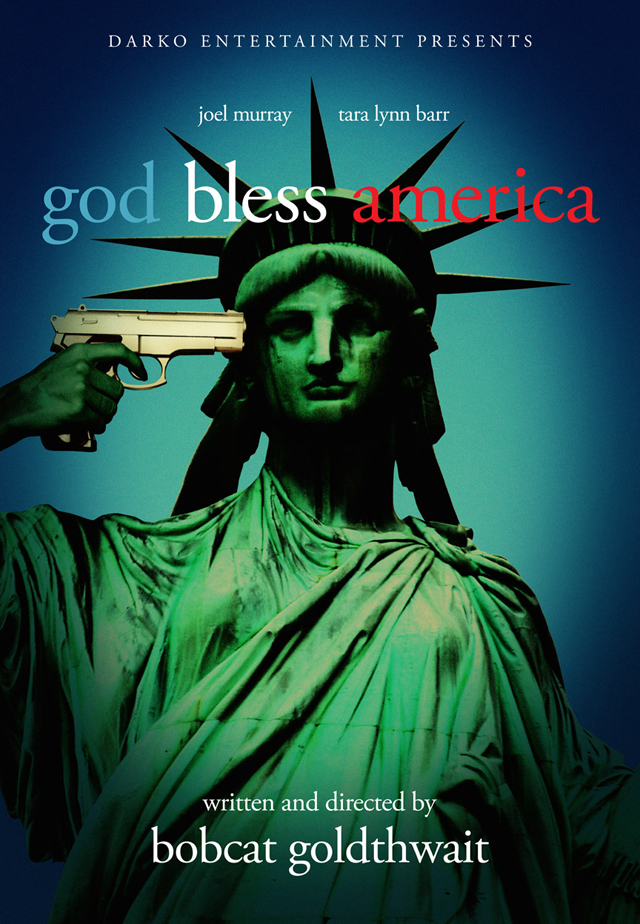
It was very exciting last night going into Midnight Madness, we had a special guest. It turns out that Comedian Bobcat Goldthwait had attended a previous Midnight Madness screening, as a general audience member. Goldthwait saw A Horrible Way to Die, by Adam Wingard, the director of You’re Next, and was so inspired by the film that he felt he had to make god bless america. It is always good news to fans of weird cinema when a midnight segment of a film festival can have this kind of snowball effect. Goldthwait seemed like a kind and charming individual as he introduced god bless america to the audience. Joel Murray and Tara Lynne Barr, who play Frank and Roxy, were also in the audience. Before we began, Goldthwait told us that he was the only person to have seen the film in it’s entirety, as he just completed it on the previous Tuesday, and we were to be the first audience, official or unofficial. Talk about a premiere!

The film is about an average guy named Frank; average in the sense that he has a job, bills to pay, noisy neighbours, etc. However, Frank is unlike the rest of the population when it comes to his rage and intolerance. He can’t stand inane reality TV shows and can’t understand the greed of some people, who will stop at nothing for their 15 minutes of fame. Add to this his terrible relationship with his daughter and ex-wife, and as you can imagine, Frank is just about at his breaking point. The inevitable happens when he loses his job, due to a misunderstanding, and hears from his doctor that he has an inoperable brain tumour. After a chance encounter with a like minded teenage girl named Roxy, the two set out on a killing spree, trying to put a dent in the mean, greedy and socially vacuous population of America.

I should just come out and say that god bless america struck a nerve with me, unfortunately not in a good way. I was reminded very much of Mark Millar’s graphic novel, Wanted, when I was watching the film. Wanted is essentially a lecture telling the reader that if they like their big screen TV and DVD collection, and if they get pushed around at work by their boss, then they are essentially a waste of space. Innocent people get shot and killed throughout Wanted in the most casual manner, often without a second thought from the main character. Maybe some people enjoy condescending entertainment in a masochistic sort of way, but I don’t see the appeal. Unfortunately, god bless america mirrored the tone found in Wanted.

Numerous sections of dialogue in the film focus on what is wrong with America, according to Frank, and small things that people do that essentially make them fair targets to kill in the eyes of Frank and Roxy. I realize the film is a comedy, but it is hard to identify with central characters that would put a bullet in your head if you’ve ever given a ‘high-five’, said ‘I’m stoked’ or called your breasts ‘the girls’.

On a positive note, the only problem I had with the movie was the story/dialogue. The film was stylishly made and the acting was solid. Goldthwait is a competent director and I would certainly watch his next film. However, the combination of lengthy rants intermingled with killing sprees just didn’t seem to work well. Perhaps if the film fully committed to the dialogue or the violence, instead of both, I would have enjoyed it more. For example, the opening scene is incredibly violent and shocking, however the remainder of the film never hits this hard again. Not even close.

Some readers may think that I am being too hard on god bless america, but perhaps it’s because I had high expectations. I went in expecting a satirical bloodbath, but felt like I was handed a pamphlet on ‘how not to be a D-bag’. This pedantic dialogue bogged down what could have otherwise been a good movie. Frank hit on a few real problems that exist in America; funeral-side protests, religious dogmatism, 24-hour cell phone syndrome and the greed for fame, all of which we should be concerned about. But Frank seemed to be experiencing a serious case of ‘back-in-the-day’ syndrome, in which the past is viewed with rose coloured glasses. It was nearly impossible to identify with such a sad individual. I can tell that Goldthwait, Murray and Barr are talented individuals and I look forward to their future films.

Perhaps god bless america succeeded by sparking this much emotion in me. I’m not sure if this film will find a niche or cult audience, we’ll just have to wait and see.

From Up on Poppy Hill (Kokuriko-zaka kara) Review (TIFF 2011)

Image is not the property of Entertainment Maven

Today at TIFF I checked out the new Japanese anime film, From up on Poppy Hill. This film is part of the TIFF kids program, so I was very worried about a few things. Would the movie be dubbed? Gross. Would there be kids running around? Also a little gross. Would an anime nerd, elbow deep in Cheetos, sit beside me. Very gross. As you can see, going to this film was quite a risky move for me, but I survived The Raid, so I thought I would be fine. It turned out that the film was subtitled (yay!), and the audience consisted of respectable anime fans, as the Studio Ghibli logo received a round of applause. Film festival crowds make me want to cry tears of joy.

There is quite a bit going on behind the scenes of a film like this. The director, Goro Miyazaki, is the son of anime legend, Hayao Miyazaki, known for such classics as Lupin the Third: Castle of Cagliostro, Princess Mononoke, Spirited Away and My Neighbor Totoro, all under the renowned Studio Ghibli. This is Goro’s second film, his first being Tales of Earthsea, which possessed many of the individual elements of a great Ghibli film, but it failed to come together as a whole. I’m happy to report that his second effort is a success. From up on Poppy Hill is a touching emotional story about the pains and joys of growing up, and importance of fighting for what you believe in.

The film is set during the 1960’s in a small town outside of Tokyo. The Olympics are coming to Tokyo and in order to prepare, many buildings are being built, while old ones are being torn down. One of the buildings set to be demolished is the clubhouse of the students at the local school. Upon hearing the news regarding the demolition of their clubhouse, the students band together in an attempt to save it. Caught in the middle of the action are two students, Umi and Shu, who harbour feelings for each other, but an emotionally devastating series of events may prevent them from ever being together.

The beginning of Poppy Hill starts off quite slowly, and for a time I was worried that Miyazaki may have missed the high benchmark of most Ghibli films, but I was quickly relieved after viewing a wonderful scene in which the students place banners on the clubhouse to protest the demolition, and the reckless Shu jumps off the roof of the clubhouse into a pool of water to express his disdain. Viewers will not find the usual Ghibli staples of the fantastic, supernatural or magical, but Miyazaki more than makes up for it, with charming characters and heart felt moments.

The characters are interesting and distinct, which makes them seem more like real people rather than animated characters. The animation style and music remind me of older Ghibli films, rather than more recent epics like Princess Mononoke and Spirited Away, but they suit the story’s setting and subject matter very well.

In the end, From up on Poppy Hill is a fine film and a worthy addition to the Studio Ghibli Filmography. There are plenty of smiles, laughs and touching moments to be experienced. I think that this is a great choice for a date night or a family movie, although it may be too mature, although not inappropriate, of a film for children.